Polio – A GHK Perspective
Understanding Polio Through Germanic Healing Knowledge
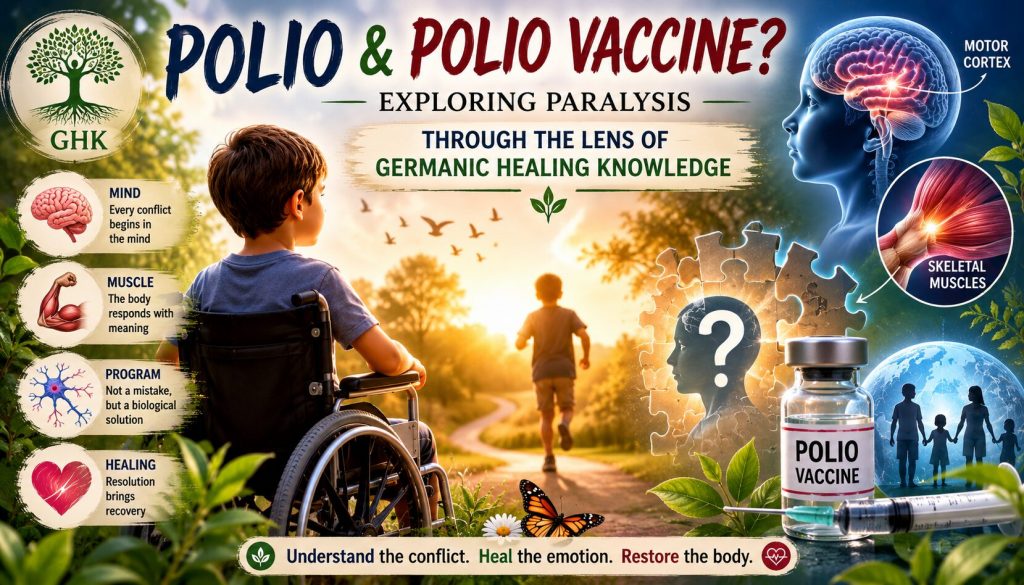
Within the Germanic Healing Knowledge (GHK) framework, the emphasis is not placed on the disease label but on understanding the biological program affecting the tissues involved. The primary focus is on the skeletal muscles and the motor control centers of the brain.
Tissue Involved
Skeletal Muscles
Germ Layer: New Mesoderm
Brain Control: Motor Cortex (Cerebral Cortex)
The biological purpose of skeletal muscles is movement, protection, escape, and interaction with the environment.
Primary Biological Conflict
Motor Conflict
The central biological question is:
“Where did I feel unable to move or act?”
Examples include:
- “I couldn’t escape.”
- “I couldn’t protect someone.”
- “I was trapped.”
- “I couldn’t defend myself.”
- “I froze in fear.”
- “I wanted to run but couldn’t.”
For children, the conflict may arise from situations that feel overwhelming from their perspective, even if they seem minor to adults.
Conflict-Active Phase
During the conflict-active phase, the biological program is interpreted as affecting voluntary muscle function.
Possible manifestations may include:
- Muscle weakness
- Reduced muscle control
- Partial loss of movement
- Paralysis of specific muscles or muscle groups
The exact muscles involved correspond to the movement that was perceived as impossible or blocked.
Healing Phase
Once the motor conflict is resolved, the body enters a repair phase.
According to GHK, this may involve:
- Gradual return of muscle function
- Temporary weakness
- Muscle twitching or spasms
- Fatigue during recovery
- Restoration of normal movement over time
The course of healing is considered to depend on factors such as the duration of the conflict, the intensity of the emotional shock, and whether recurring triggers (“tracks”) reactivate the program.
Secondary Self-Devaluation Conflict
If weakness or paralysis persists, a second biological conflict may develop.
Self-Devaluation
Examples:
- “I am weak.”
- “I can’t walk like others.”
- “I am a burden.”
- “I am not capable.”
This secondary conflict may involve tissues of the new mesoderm such as:
- Bones
- Muscles
- Tendons
- Ligaments
- Lymphatic tissue
From the GHK perspective, resolving this secondary emotional burden may be just as important as understanding the original motor conflict.
Biological Purpose
According to the Fifth Biological Law of GHK, the body is understood to be implementing a meaningful biological adaptation rather than making a mistake.
The temporary reduction in movement is interpreted as a survival strategy in response to an overwhelming situation in which movement was perceived as impossible or dangerous.
Questions to Explore
When working with an individual who has experienced paralysis or muscle weakness, a GHK practitioner may explore:
- When did the symptoms first begin?
- What unexpected event occurred beforehand?
- Did you experience a situation where you felt trapped or unable to act?
- Did you witness something frightening and freeze?
- Did you feel unable to protect yourself or someone you loved?
- Has there been an ongoing feeling of weakness, helplessness, or self-devaluation since then?
Personality Patterns Often Seen
Individuals who experience motor conflicts may often be:
- Highly responsible
- Protective of others
- Sensitive to danger
- Quick to freeze under overwhelming stress
- Prone to carrying guilt about not being able to act
Healers Connect Summary
GHK Perspective: Rather than viewing polio through the diagnosis alone, GHK explores the biological program affecting the skeletal muscles and motor cortex. The primary conflict theme is a motor conflict—feeling unable to move, escape, defend, or act in an unexpected and overwhelming situation. If long-term disability follows, secondary self-devaluation conflicts may develop. Understanding the emotional timeline, identifying recurring triggers, and resolving unresolved conflict patterns are central to the GHK approach to understanding paralysis-related symptoms.