– Allopathic and GHK Perspective
What is Lipodermatosclerosis? (Allopathic Perspective)
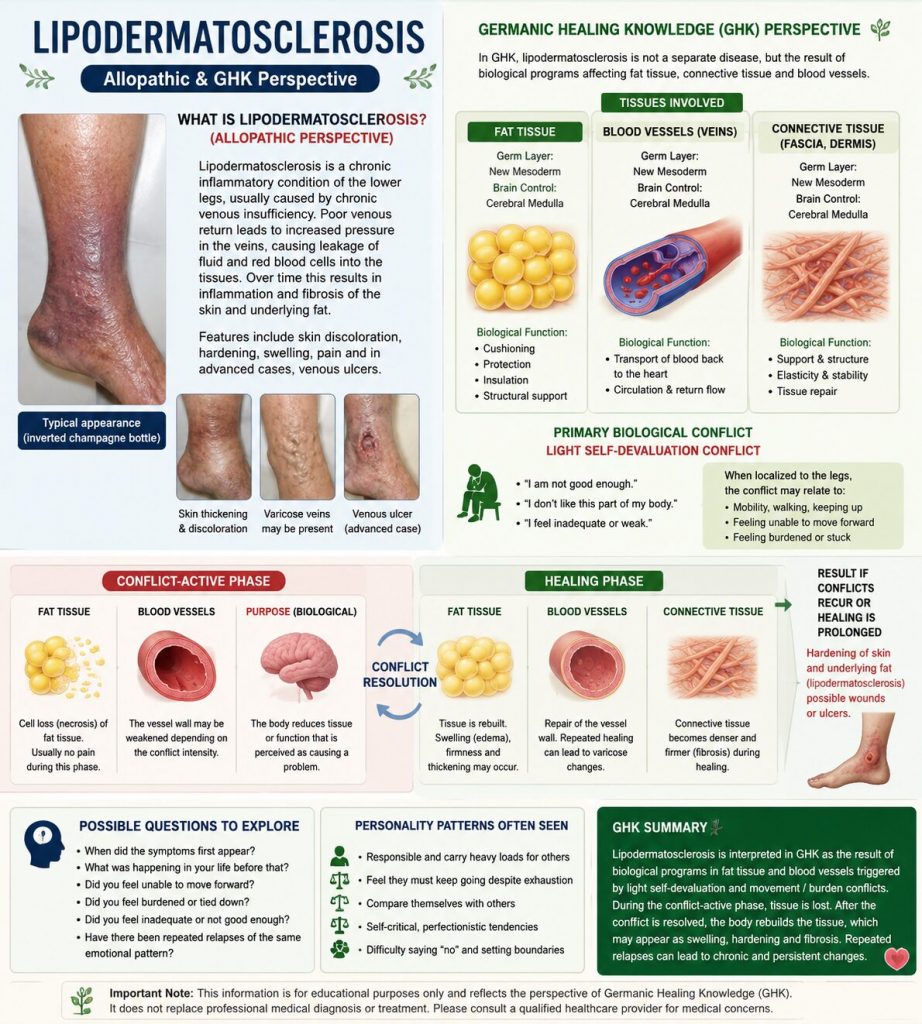
Lipodermatosclerosis is a chronic inflammatory condition of the lower legs characterized by hardening (fibrosis) of the skin and the fat beneath it. It is most commonly associated with chronic venous insufficiency, where impaired venous return leads to increased pressure in the leg veins. Over time, persistent inflammation, tissue damage, and fibrosis produce the characteristic tightening of the lower leg, sometimes described as an “inverted champagne bottle” appearance. Symptoms often include pain, swelling, skin discoloration, thickening, and, in advanced cases, venous ulcers. Treatment focuses on improving venous circulation through compression therapy, leg elevation, exercise, weight management, and management of venous disease. (NCBI)
Lipodermatosclerosis – GHK Perspective
In Germanic Healing Knowledge, there is no separate disease program called “lipodermatosclerosis.” Instead, the condition is understood by analyzing the biological programs affecting the fat tissue, connective tissue, and blood vessels involved.
Tissues Involved
1. Fat Tissue
Germ Layer: New Mesoderm
Brain Control: Cerebral Medulla
Biological Function:
- Cushioning
- Protection
- Insulation
- Structural support
2. Blood Vessels (Veins)
Also derived from the new mesoderm, the veins are interpreted through the lens of self-devaluation and movement-related conflicts.
Primary Biological Conflict
Light Self-Devaluation Conflict
According to GHK, fat tissue is associated with a light self-devaluation conflict.
Examples include:
- “I am not good enough.”
- “I don’t like this part of my body.”
- “I am weak.”
- “I can’t keep up.”
- “I feel inadequate.”
When localized to the legs, the conflict may relate to:
- Mobility
- Walking
- Physical performance
- Feeling unable to move forward
- Feeling burdened
The exact location corresponds to the area where the self-devaluation is experienced.
Conflict-Active Phase
Fat Tissue
According to GHK:
- Fat tissue undergoes cell loss (necrosis).
- There are often few noticeable symptoms during this phase.
- The biological purpose is interpreted as reducing tissue in response to the conflict.
Healing Phase
Once the conflict is resolved:
The body begins rebuilding the lost tissue.
Possible manifestations include:
- Swelling
- Fluid retention (edema)
- Thickening of tissue
- Firmness
- Increased tissue volume
Depending on the duration and intensity of the conflict, the repair process may produce significant fibrosis or induration.
Blood Vessels and Venous Changes
If chronic venous insufficiency or varicose veins are also present, GHK explores additional conflict themes.
Biological Conflict
Examples include:
- Feeling “tied down”
- Feeling unable to move freely
- Carrying a burden
- Being held back in life
- Feeling unable to keep up
According to LearningGNM, recurrent conflict relapses may lead to repeated healing cycles in the veins, contributing to chronic venous changes such as varicosities. (Learning GNM)
Questions to Explore
A GHK practitioner might ask:
- When did the leg symptoms first appear?
- What was happening in your life before that?
- Did you feel physically or emotionally unable to move forward?
- Did you feel burdened or “stuck”?
- Was there a situation where you felt inadequate or unable to keep up?
- Have there been repeated relapses into the same emotional pattern?
Personality Patterns Often Seen
People with these conflict themes may:
- Carry responsibilities for long periods.
- Feel they must keep going despite exhaustion.
- Compare themselves to others.
- Be highly self-critical.
- Feel trapped by family, work, or caregiving responsibilities.
Summary
GHK Perspective: Lipodermatosclerosis is interpreted by examining the biological programs affecting the fat tissue and associated blood vessels rather than as a separate disease entity. The fat tissue is associated with a light self-devaluation conflict, while chronic venous changes may involve themes of feeling burdened, restricted, or unable to move forward. During the conflict-active phase, fat tissue undergoes cell loss. After conflict resolution, the body enters a healing phase with tissue rebuilding, edema, and, in prolonged or recurrent cases, fibrosis and induration. Repeated conflict relapses may contribute to persistent or chronic changes.
🎣 Learn to Fish, Not Just Catch One
Tired of asking others to identify the underlying conflicts behind every case?
There’s an old saying:
“Give a person a fish and you feed them for a day. Teach them how to fish and you feed them for a lifetime.”
Our Germanic Healing Knowledge Foundation Course is designed to help you understand the biological conflict patterns yourself, so you can confidently analyze cases, identify conflict themes, and apply the principles directly from the source.
Stop searching for answers. Learn how to find them.
👉 Join the course today and learn to fish.
❤️ Support Our Mission
If you found this article insightful and would like to help us continue creating educational resources on Germanic Healing Knowledge, emotional wellbeing, and natural living, please consider making a contribution.
Your donation helps us:
- Research and document spontaneous healing case studies.
- Create free educational articles, videos, and illustrations.
- Translate valuable knowledge into Indian languages.
- Support community healing initiatives, workshops, and affordable education.
- Build the Healers Connect knowledge library for families and practitioners around the world.
Every contribution, no matter the size, helps us reach more people with hope, education, and a deeper understanding of health.
🙏 Thank you for being a part of this journey.
Support Healers Connect
Together, we can make life-changing knowledge accessible to everyone.
❤️ Donate Now