(Based on learninggnm.com – Ovaries, Hormones & Female Sexual Organs SBS)
A Different Understanding
In conventional medicine, Polycystic Ovary Syndrome (PCOD/PCOS) is described as a hormonal and metabolic condition involving:
- irregular periods
- ovarian cysts
- hormonal imbalance
- infertility
- weight gain or acne
In Germanic Healing Knowledge (GHK), ovarian conditions are understood through the psyche–brain–organ connection, especially involving:
- loss conflicts
- feminine identity conflicts
- hormonal adaptation
1. The Core Biological Conflict
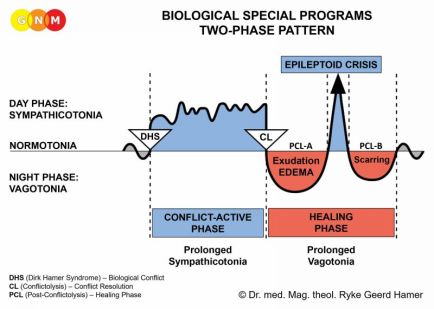
According to learninggnm.com, the ovaries are linked to:
👉 Loss Conflict
This includes:
- loss of a loved one
- break-up or emotional separation
- miscarriage or abortion
- feeling emotionally abandoned
The conflict may be:
- literal
- symbolic
- deeply internalized
2. What Happens Biologically
🔴 Conflict-Active Phase
During active conflict:
- ovarian tissue undergoes cell loss (necrosis)
- estrogen production may reduce
- cycles may become irregular
Possible experiences:
- absent periods
- hormonal imbalance
- reduced fertility
🟢 Healing Phase (After Resolution)
Once the conflict resolves:
- the ovary begins rebuilding
- ovarian cysts can form temporarily as part of repair
According to learninggnm.com:
Ovarian cysts are part of the healing process after a loss conflict.
These cysts later harden and integrate into hormone-producing tissue if healing completes naturally.
3. How PCOD/PCOS Is Viewed in GHK
From a GHK perspective, PCOD may reflect:
- ongoing or repeated loss conflicts
- repeated healing cycles
- hormonal adaptation during unresolved emotional stress
The “multiple cysts” may correspond to:
- recurring repair attempts
- interrupted healing phases
- repeated emotional triggers (“tracks”)
4. Emotional Themes Often Seen
Possible underlying emotional states include:
- heartbreak
- grief
- rejection
- loss of feminine security
- fear related to relationships or motherhood
5. Hormonal Changes in GHK
GHK sees hormones as biologically adaptive.
When ovarian function changes:
- estrogen levels shift
- cycles alter
- ovulation may change
This is viewed as:
an intelligent biological response to emotional conflict.
6. Why Symptoms Persist
Persistent PCOD patterns may indicate:
👉 Ongoing conflict activity
or
👉 Conflict relapses (tracks)
Triggers can include:
- unresolved relationship pain
- repeated emotional insecurity
- fear of abandonment
- pressure around fertility or marriage
7. GHK Approach to Resolution
Healing focuses on:
- resolving the underlying loss conflict
- restoring emotional safety
- rebuilding self-worth and feminine security
- reducing fear and repeated triggers
As the psyche settles, the biological program can complete more naturally.
8. Key Insight
✔ Conflict-active phase → ovarian tissue loss / hormonal shifts
✔ Healing phase → cyst formation and repair
In GHK, cysts are not seen as meaningless growths, but as part of a biological healing response.
Conclusion
From a learninggnm.com perspective, PCOD/PCOS is understood as a biological adaptation connected to:
- loss conflicts
- emotional separation
- hormonal healing processes in the ovaries
The condition reflects the body’s attempt to adapt, repair, and restore balance following unresolved emotional experiences.
Reference
learninggnm.com – Female Sexual Organs / Ovaries SBS