Leprosy Through the Lens of Germanic Healing Knowledge (GHK)
Understanding Leprosy Beyond the Conventional View
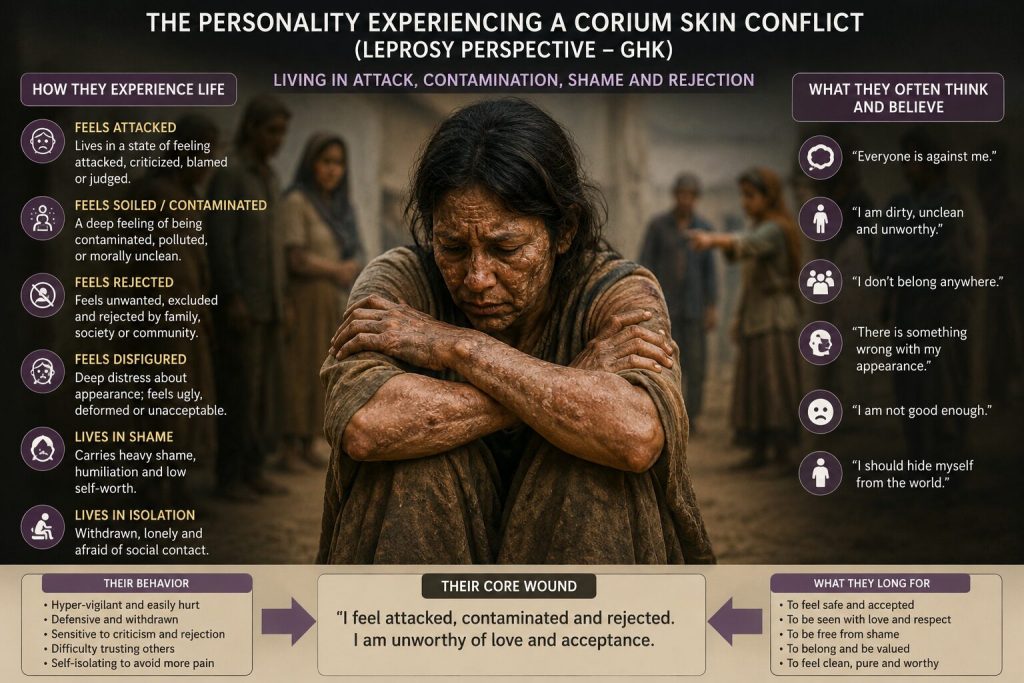
Conventionally, leprosy (Hansen’s disease) is understood as a chronic infectious disease affecting the skin and peripheral nerves. However, Germanic Healing Knowledge (GHK) approaches skin conditions from a completely different perspective, viewing symptoms as meaningful biological adaptations rather than random disease processes.
According to GHK, the symptoms associated with leprosy are linked to biological programs involving the corium skin (dermis), which is controlled by the cerebellum and associated with experiences of attack, contamination, disfigurement, or feeling deeply soiled.
The Biological Conflict
The corium skin is associated with what GHK describes as:
- Attack conflicts
- Feeling soiled conflicts
- Disfigurement conflicts
- Deep feelings of contamination or impurity
These conflicts may be experienced literally or symbolically. Examples include:
- Being physically attacked
- Feeling degraded or humiliated
- Experiencing social rejection
- Feeling contaminated by an event or person
- Carrying shame associated with one’s appearance
- Feeling “unclean” on a physical, emotional, or social level
According to GHK, the psyche does not always distinguish between literal and symbolic experiences. Therefore, social exclusion, humiliation, accusations, and perceived contamination may trigger the same biological response as a physical attack.
What Happens During the Conflict-Active Phase?
When the conflict is active, GHK proposes that the corium skin responds by increasing cellular growth.
The biological purpose of this response is believed to be protection. The body attempts to create a thicker, stronger protective layer at the location where the attack or contamination is perceived. In modern medicine such growths may be classified as pathological changes, but GHK interprets them as meaningful biological adaptations.
The Healing Phase
According to GHK, once the conflict is resolved, the body enters a healing phase.
During this stage:
- Microbial activity may increase.
- Tissue that is no longer required is broken down.
- Inflammation can occur.
- Swelling may appear.
- Discharge, crusting, or ulceration may be observed.
GHK views these symptoms as part of a restoration process rather than evidence that the body is failing. The intensity of healing is believed to correspond to the intensity and duration of the original conflict.
The Social Dimension of Leprosy
Historically, few diseases have carried as much stigma as leprosy.
Individuals affected by leprosy have often experienced:
- Social isolation
- Rejection by family and community
- Fear of contagion
- Shame and humiliation
- Loss of identity and belonging
From a GHK perspective, these experiences themselves may perpetuate ongoing attack and contamination conflicts, creating a cycle in which the emotional burden becomes as significant as the physical symptoms. This perspective highlights the importance of compassion, inclusion, and emotional healing alongside physical care.
A GHK-Oriented Approach
Practitioners working from a GHK framework may explore questions such as:
- When did the individual first feel attacked or contaminated?
- Was there a significant experience of humiliation or exclusion?
- Is there an unresolved feeling of shame related to appearance?
- Has the person felt rejected by family, society, or community?
- Are there ongoing reminders that keep the conflict active?
The aim is to identify and resolve the underlying emotional conflicts believed to be associated with the biological program. According to GHK, conflict resolution allows the body to complete its natural healing process.