Part I: Unlearning Disease — Slaying the Demon of Fear Through the 5 Biological Laws
Should we be afraid of kidney issues according to Germanic Healing Knowledge (GHK)? Within the GHK framework, Dr. Ryke Geerd Hamer’s work was presented as an attempt to understand illness through biological programs and to reduce fear surrounding physical symptoms.
GHK proposes that what conventional medicine calls diseases or cellular malfunctions can instead be understood as Sinnvolles Biologisches Sonderprogramm (SBS) — a Meaningful Biological Special Program — involving the Psyche, Brain, and Organ.
According to GHK, Dr. Hamer observed relationships between embryonic germ layers, specific conflict themes and biological changes. The model describes a natural Two-Phase Rhythm.
1. The Conflict-Active Phase (ca-Phase)
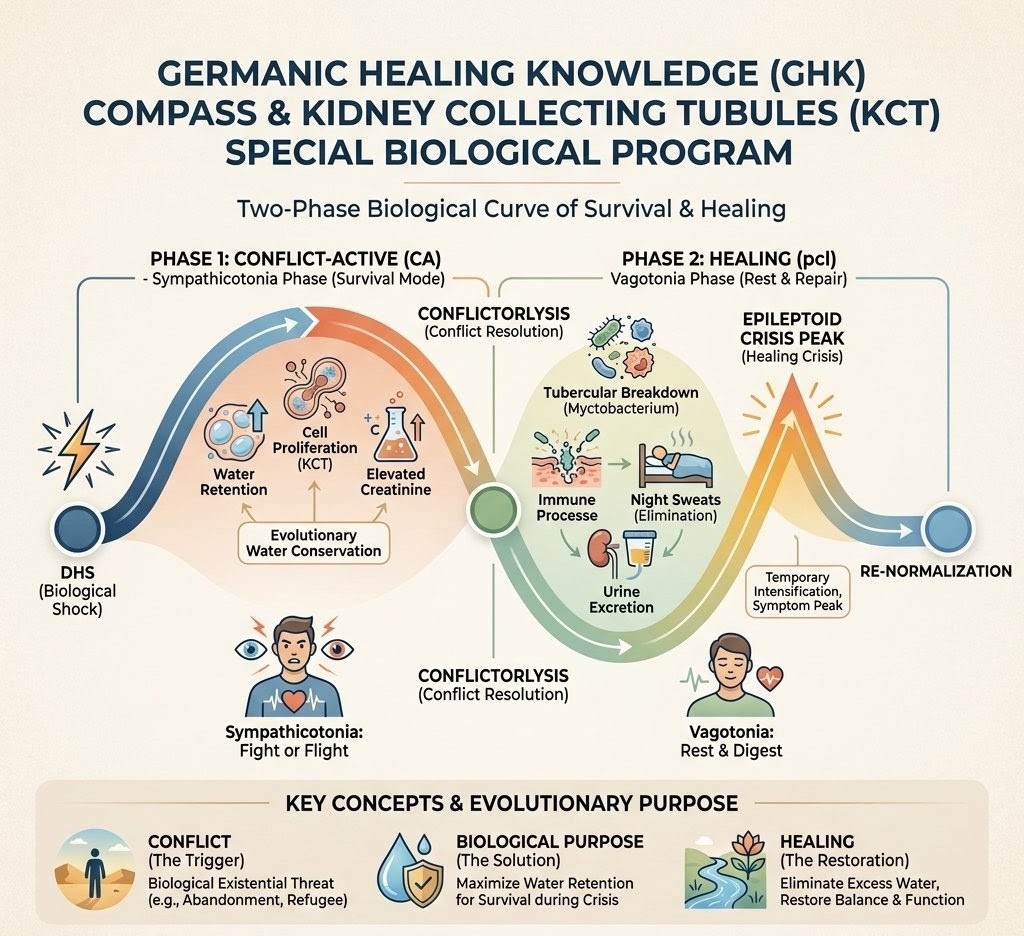
According to GHK, this phase begins following what is described as a Dirk Hamer Syndrome (DHS) — an unexpected and highly stressful experience. The model associates this phase with sympathicotonia, stress, cold extremities, insomnia, loss of appetite and tissue-specific changes.
2. The Healing Phase (pcl-Phase)
According to GHK, once the conflict is resolved (Conflictolyse), the body enters a healing phase associated with vagotonia, warmth, swelling, fatigue and other changes.
The GHK Compass & The Analogy of Natural Birth
Within GHK, the GHK Compass is used to illustrate the proposed relationship between conflict activity and the healing phase over time.
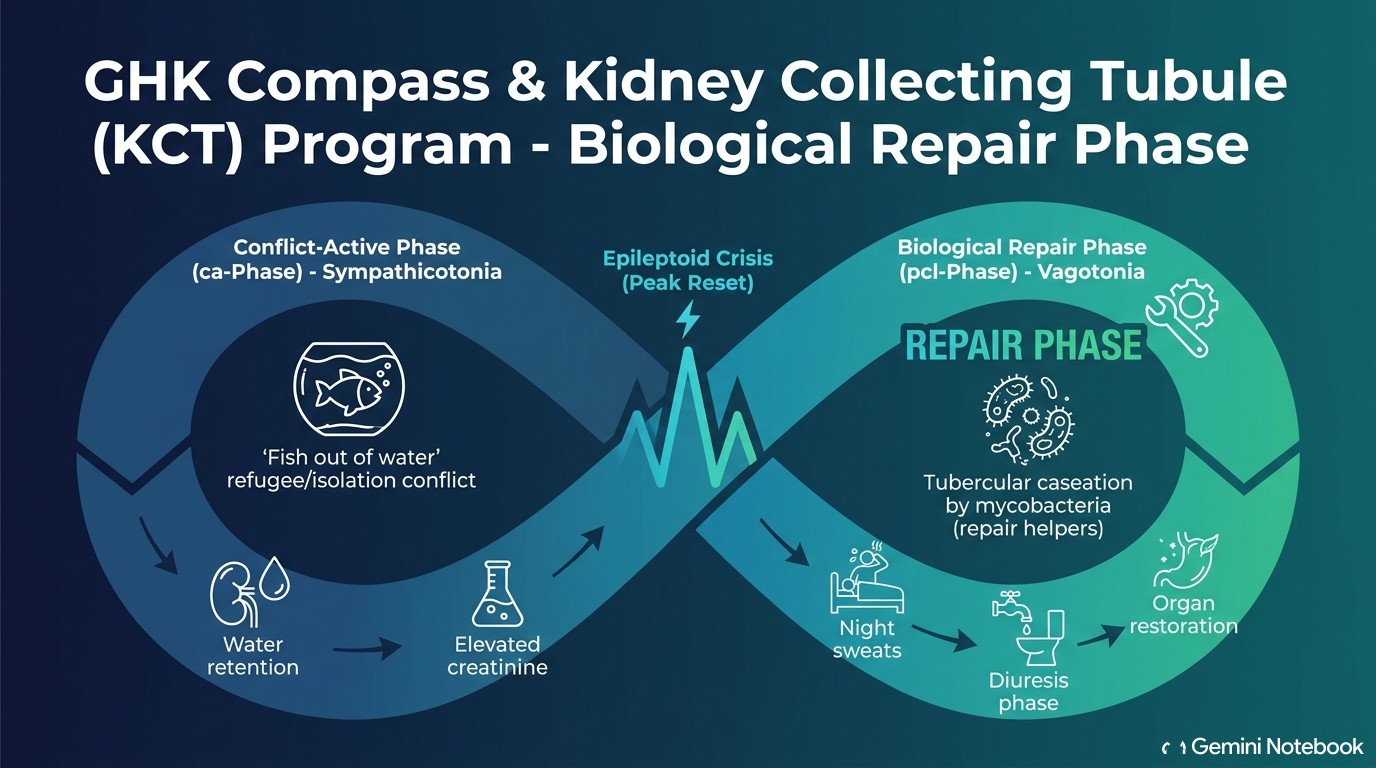
This biological curve is compared within GHK discussions to the experience of natural labor and childbirth.
- During natural labor, a mother experience periods of very high intensity.
- In conventional settings, intense symptoms may sometimes lead to concern and medical intervention.
- Within the GHK model, the peak is interpreted as the Epileptoid Crisis, described as a turning point in the healing phase.
Why Dietary Isolation and Panic Backfire
Within the GHK framework, a biological program is proposed to begin following an acute conflict experience. GHK further proposes that extreme isolation, feelings of abandonment or a perceived refugee situation may be associated with what it calls the Kidney Collecting Tubule (KCT) program.
From this perspective, the emphasis is placed on reducing fear and understanding the individual’s emotional and environmental situation.
GHK therefore presents a framework in which faith, trust in life and reduced fear can play an important role in how a person experiences physical symptoms.
Part II: Visual Graphic — The GHK Compass & Kidney SBS
The following graphic illustrates the GHK Compass Curve and Kidney Collecting Tubule (KCT) Special Biological Program.
Part III: The Kidney Collecting Tubule (KCT) SBS
To understand the GHK perspective on kidney-related symptoms, we can examine the biological logic that GHK associates with the Kidney Collecting Tubules (Nierensammelrohre).
1. The Biological Conflict: The “Fish Out of Water”
According to GHK, the kidney collecting tubules originate from the entoderm, described as the oldest embryonic germ layer, and are associated with brainstem relays.
Conflict Theme: GHK associates the KCT program with refugee, existence or abandonment experiences — situations in which a person feels completely isolated, displaced, expelled from their environment or deprived of basic security.
Evolutionary Interpretation: GHK proposes an evolutionary explanation in which water conservation would have provided a survival advantage to an organism experiencing a severe “fish out of water” situation.
2. Conflict-Active Phase (ca-Phase): Water Retention & Creatinine Elevation
- Organ Adaptation: According to GHK, cell proliferation in the collecting tubules is associated with the active phase.
- Biological Markers: GHK literature associates this process with reduced urine output and changes in creatinine and other metabolic markers.
- GHK Interpretation: Elevated creatinine is interpreted within this model as part of a water-conservation process.
- Proposed Biological Purpose: Conservation of fluid during an existential or refugee-type situation.
3. Healing Phase (pcl-Phase): Tubercular Clearance & Diuresis
According to GHK, when the perceived refugee or existence conflict is resolved, the body enters the healing phase.
- Conflict Resolution: Feeling safe, welcomed or supported.
- Microbial Interpretation: GHK associates the healing phase with tubercular breakdown of temporary tissue.
- Symptoms described within GHK: Night sweats, fever and protein in urine.
- Diuresis: GHK describes a later phase in which retained fluid is released.
4. “The Syndrome” (Das Syndrom): Why Kidney Issues Amplify Other Symptoms
Within GHK, “The Syndrome” describes a situation in which an active Kidney Collecting Tubule program occurs at the same time as another biological program is in its healing phase.
According to the GHK model, this combination can increase water retention and amplify swelling associated with another healing process.
GHK therefore places particular emphasis on the relationship between perceived isolation, fear, water retention and other simultaneous healing processes.
Dr. Melissa Sell — Kidney Collecting Tubules & “The Syndrome”
Watch Dr. Melissa Sell discuss the Kidney Collecting Tubules and the GHK concept known as “The Syndrome.”
Part IV: Choosing Faith Over Fear
Understanding the 5 Biological Laws can provide a different framework for thinking about bodily changes, emotional experiences and the relationship between stress and the body.
Within GHK, high creatinine, temporary swelling and water retention are interpreted as purposeful biological programs rather than meaningless breakdowns.
By reducing panic, creating a sense of safety and examining the emotional circumstances surrounding symptoms, the GHK framework emphasizes conflict resolution and recovery.
For those who approach healing through faith, this perspective can also become an invitation toward greater trust, gratitude and reflection on the relationship between mind, body and Creation.
Healers Connect
Exploring healing, consciousness, faith and biological perspectives.