What is Breast Cancer?
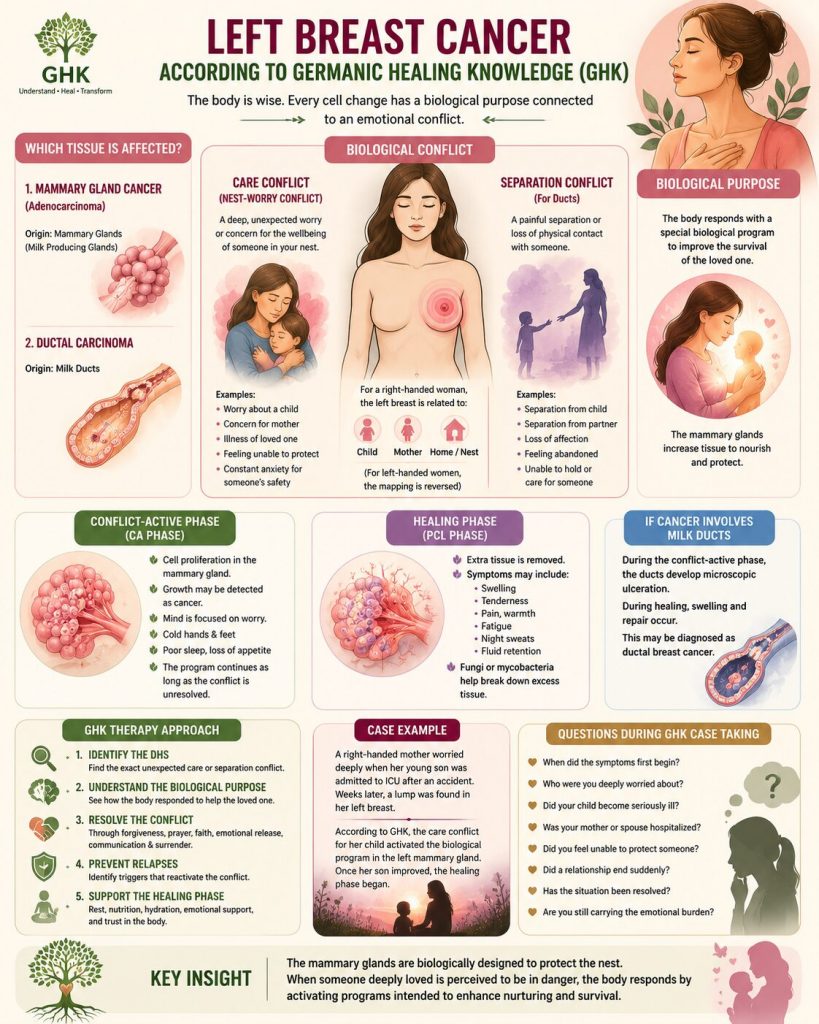
According to Germanic Healing Knowledge (GHK), breast cancer is understood based on the embryological origin of the breast tissue involved. Different parts of the breast correspond to different biological conflicts.
The milk-producing glands (mammary glands) are associated with a care or worry conflict, while the milk ducts are associated with a separation conflict.
When discussing breast cancer, it is essential to determine which tissue is affected.
1. Mammary Gland Cancer (Adenocarcinoma)
Biological Conflict
Care Conflict (Nest-Worry Conflict)
A profound, unexpected worry or concern for the wellbeing of someone considered part of one’s “nest.”
Examples include:
- Worry about a child
- Concern for a spouse
- Fear regarding a parent’s health
- Caring for a critically ill family member
- Feeling unable to protect someone
- Constant anxiety over a loved one’s safety
Why the Left Breast?
According to GHK, laterality plays an important role.
For a right-handed woman, the left breast is generally associated with:
- Children
- Mother
- Home or nest
For a left-handed woman, the relationship mapping is reversed.
Therefore, a right-handed woman developing a tumor in the left mammary gland may have experienced a severe care conflict involving her child or mother.
Biological Purpose
According to GHK, the mammary glands respond by increasing milk-producing tissue to enhance nourishment and improve the chances of survival for the loved one experiencing danger.
Conflict-Active Phase (CA Phase)
During the active conflict:
- Cell proliferation occurs in the mammary gland.
- Conventional medicine may diagnose this growth as breast cancer.
- The individual remains emotionally preoccupied with protecting or helping the loved one.
- Cold hands and feet
- Poor sleep
- Reduced appetite
- Persistent worry
The biological program continues as long as the care conflict remains unresolved.
Healing Phase (PCL)
Once the care conflict is resolved:
The body begins removing the extra glandular tissue.
Possible healing symptoms include:
- Swelling
- Tenderness
- Pain
- Warmth
- Fatigue
- Night sweats
- Fluid accumulation
According to GHK, fungi or mycobacteria participate in breaking down the excess glandular tissue when present.
Questions During GHK Case Taking
A practitioner may explore:
- When did the breast symptoms first begin?
- Who were you deeply worried about?
- Did your child become seriously ill?
- Was your mother hospitalized?
- Did your spouse face a life-threatening situation?
- Did you feel unable to protect someone you loved?
- Has the situation been resolved?
- Are you still carrying the emotional burden?
GHK Therapy Approach
The therapeutic focus is directed toward resolving the underlying emotional conflict.
1. Identify the DHS
Locate the exact unexpected care conflict that preceded symptom onset.
2. Understand the Biological Purpose
Recognize how the body responded in an attempt to improve the survival of a loved one.
3. Resolve the Care Conflict
Support emotional resolution through:
- Honest communication
- Prayer
- Faith and surrender
- Emotional processing
- Forgiveness
- Trust
- Family reconciliation
4. Prevent Conflict Relapses
Recognize reminders that repeatedly reactivate the care conflict and cultivate new ways of responding.
5. Support the Healing Phase
Encourage:
- Adequate rest
- Nutritious food
- Hydration
- Emotional support
- Reduced stress
- Confidence in the body’s biological adaptation
If the Cancer Involves the Milk Ducts
If the diagnosis is ductal carcinoma, GHK interprets it differently.
Biological Conflict
Separation Conflict
Examples include:
- Separation from a child
- Separation from a partner
- Loss of physical affection
- Feeling abandoned
- Being unable to hold or care for a loved one
The ducts develop microscopic ulceration during the conflict-active phase. During healing, swelling and tissue repair occur, which may be identified as ductal breast cancer on imaging.
Case Example
A right-handed mother experienced intense fear and worry when her young son was admitted to intensive care after an accident.
Weeks later, she discovered a lump in her left breast.
According to GHK, the care conflict involving her child activated a biological program in the left mammary gland. Once her son’s condition improved, the healing phase began, with inflammation and tissue remodeling accompanying the resolution of the conflict.
Key Insight
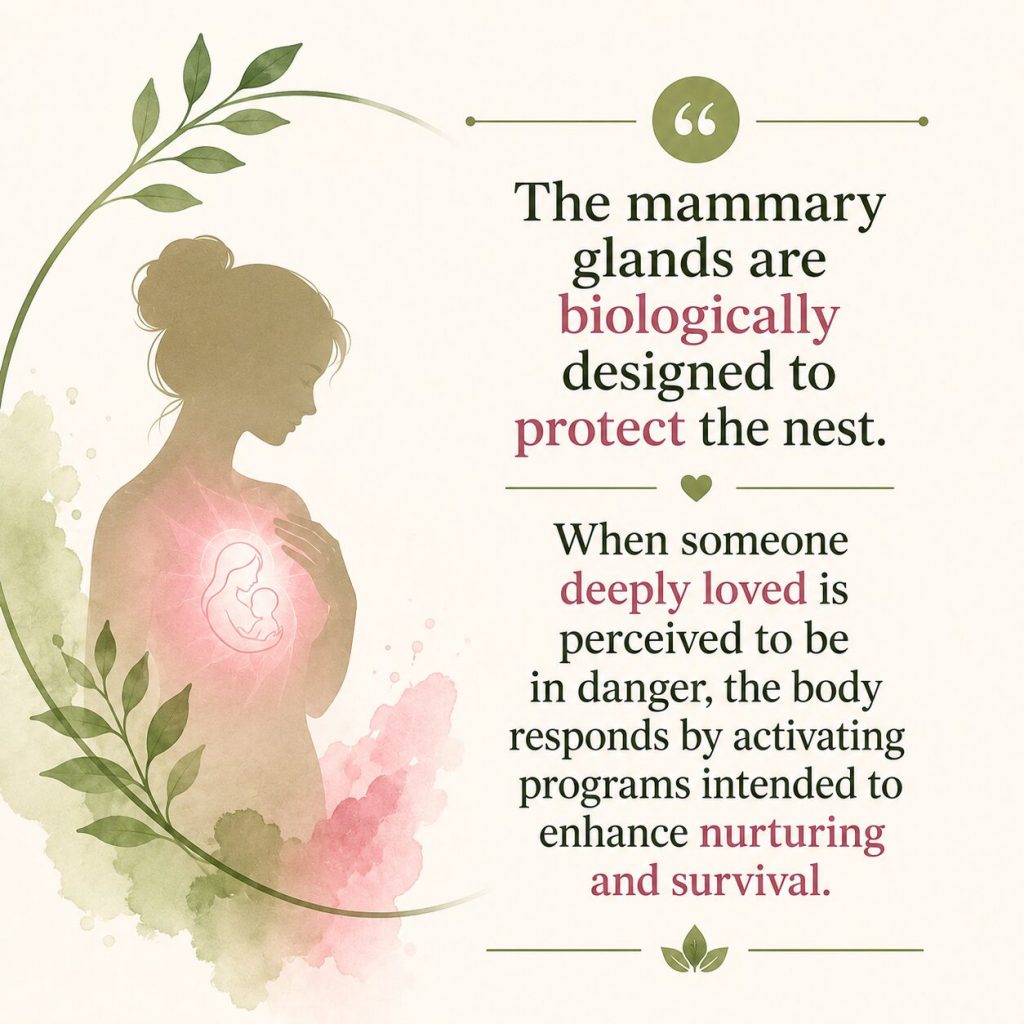
“The mammary glands are biologically designed to protect the nest. When someone deeply loved is perceived to be in danger, the body responds by activating programs intended to enhance nurturing and survival.”