What is Colorectal Cancer?
According to Germanic Healing Knowledge (GHK), the ileo-cecum region (where the small intestine joins the large intestine) belongs to the intestinal mucosa of endodermal origin, controlled by the brainstem.
This tissue is associated with indigestible morsel conflicts—situations that an individual experiences as impossible to “digest,” accept, or process.
The biological conflict differs depending on whether the experience is interpreted as a physical morsel or a figurative morsel.
Biological Conflict
Indigestible Morsel Conflict
A sudden, unexpected event perceived as:
- Impossible to accept
- Impossible to digest
- Something one cannot “swallow”
- A situation that feels overwhelmingly unfair
- Feeling trapped with no solution
- An unbearable life circumstance
Examples include:
- Receiving devastating news
- Sudden financial collapse
- Business betrayal
- Family inheritance disputes
- Public humiliation
- Divorce or separation that cannot be accepted
- Losing one’s livelihood
- Unexpected legal problems
- Feeling forced into an unbearable situation
The Special Significance of the Ileo-Cecum Region
According to GHK, the ileo-cecum area represents the body’s effort to process an especially difficult “morsel” before it moves further through the digestive tract.
It often relates to situations where a person repeatedly thinks:
- “I just can’t digest this.”
- “This is impossible to accept.”
- “I can’t believe this happened.”
- “I don’t know how to move forward.”
Biological Purpose
According to GHK, the biological purpose is to increase digestive capacity by temporarily producing additional secretory tissue, enabling the organism to better digest and process the perceived indigestible morsel.
Conflict-Active Phase (CA Phase)
During the active conflict:
- Cell proliferation occurs within the intestinal mucosa.
- Digestive secretions increase.
- The individual remains mentally preoccupied with the conflict.
- Cold hands and feet
- Poor sleep
- Reduced appetite
- Constant rumination
- Emotional isolation
Conventional medicine may identify this tissue growth as adenocarcinoma of the ileo-cecal region.
Healing Phase (PCL)
Once the conflict is emotionally resolved:
The body begins removing the extra tissue that is no longer biologically required.
Possible healing symptoms include:
- Abdominal pain
- Cramping
- Fever
- Fatigue
- Night sweats
- Increased bowel movements
- Temporary diarrhea
- Mucus in the stool
- Intestinal inflammation
According to GHK, fungi and mycobacteria participate in breaking down the additional tissue when available.
Questions During GHK Case Taking
A practitioner may explore:
- When did your digestive symptoms first begin?
- What happened unexpectedly just before the symptoms started?
- What situation felt impossible to accept?
- What has been extremely difficult to “digest” emotionally?
- Were you involved in a painful family dispute?
- Did you experience a major financial or business loss?
- Did you feel trapped in an unbearable circumstance?
- Has the situation been resolved, or are you still living with it?
GHK Therapy Approach
The therapeutic goal is to understand and resolve the biological conflict that initiated the program.
1. Identify the DHS
Determine the exact unexpected conflict shock that preceded symptom onset.
2. Understand the Biological Meaning
Recognize how the body responded to help process what the psyche perceived as an indigestible life event.
3. Resolve the Emotional Conflict
Facilitate genuine resolution through:
- Emotional awareness
- Honest communication
- Forgiveness
- Prayer
- Faith and surrender
- Acceptance
- Guided emotional processing
- Family reconciliation
4. Prevent Conflict Relapses
Identify ongoing reminders or circumstances that repeatedly reactivate the indigestible morsel conflict and develop healthier responses.
5. Support the Healing Phase
Encourage:
- Rest
- Hydration
- Easily digestible, nourishing food
- Emotional support
- Stress reduction
- Trust in the body’s biological adaptation
Case Example
A 55-year-old businessman unexpectedly lost his life’s savings after being deceived by a trusted partner. For months he repeatedly thought, “I simply cannot digest what has happened.”
Several months later, he developed symptoms including abdominal discomfort and altered bowel habits. Investigations revealed a tumor in the ileo-cecal region.
According to GHK, the unexpected financial betrayal represented the indigestible morsel conflict, while the tissue changes reflected the biological program associated with that conflict.
Key Insight
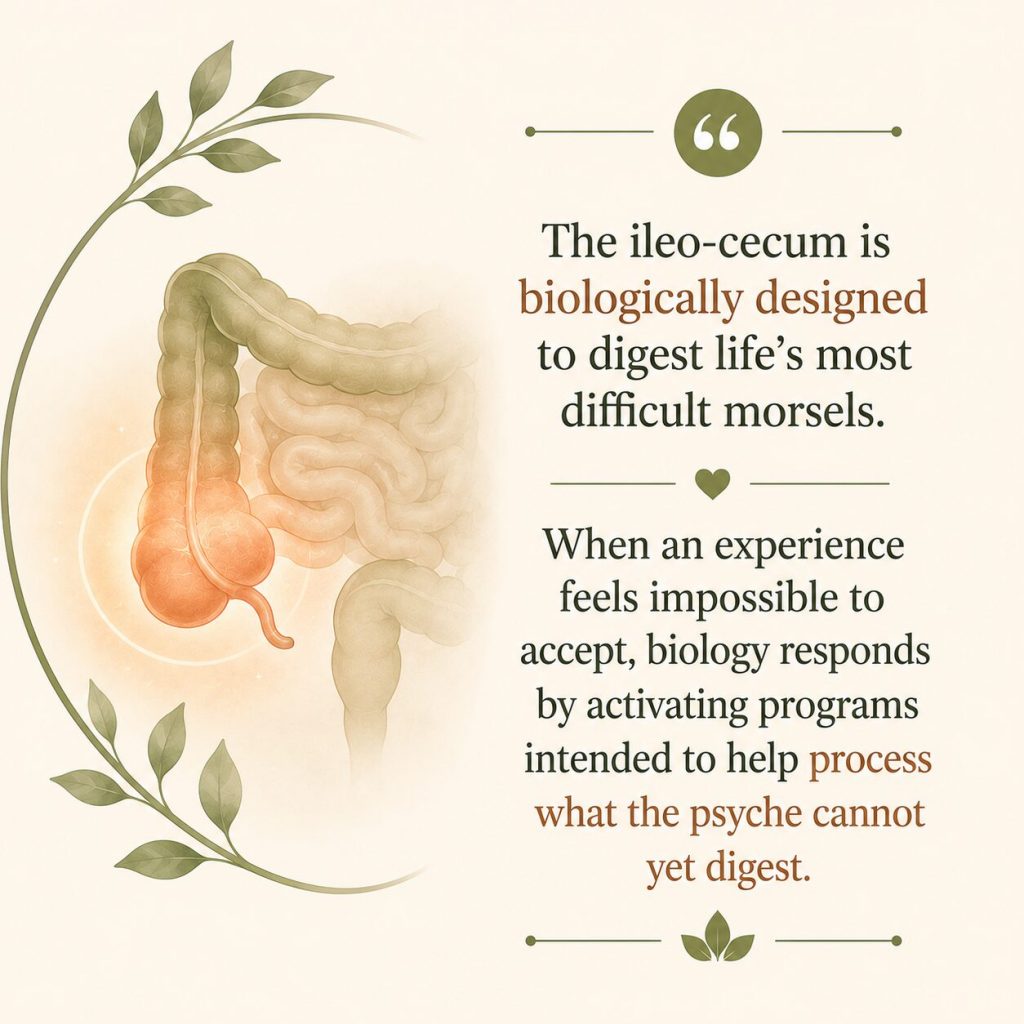
“The ileo-cecum is biologically designed to digest life’s most difficult morsels. When an experience feels impossible to accept, biology responds by activating programs intended to help process what the psyche cannot yet digest.”