What is Testicular Cancer?
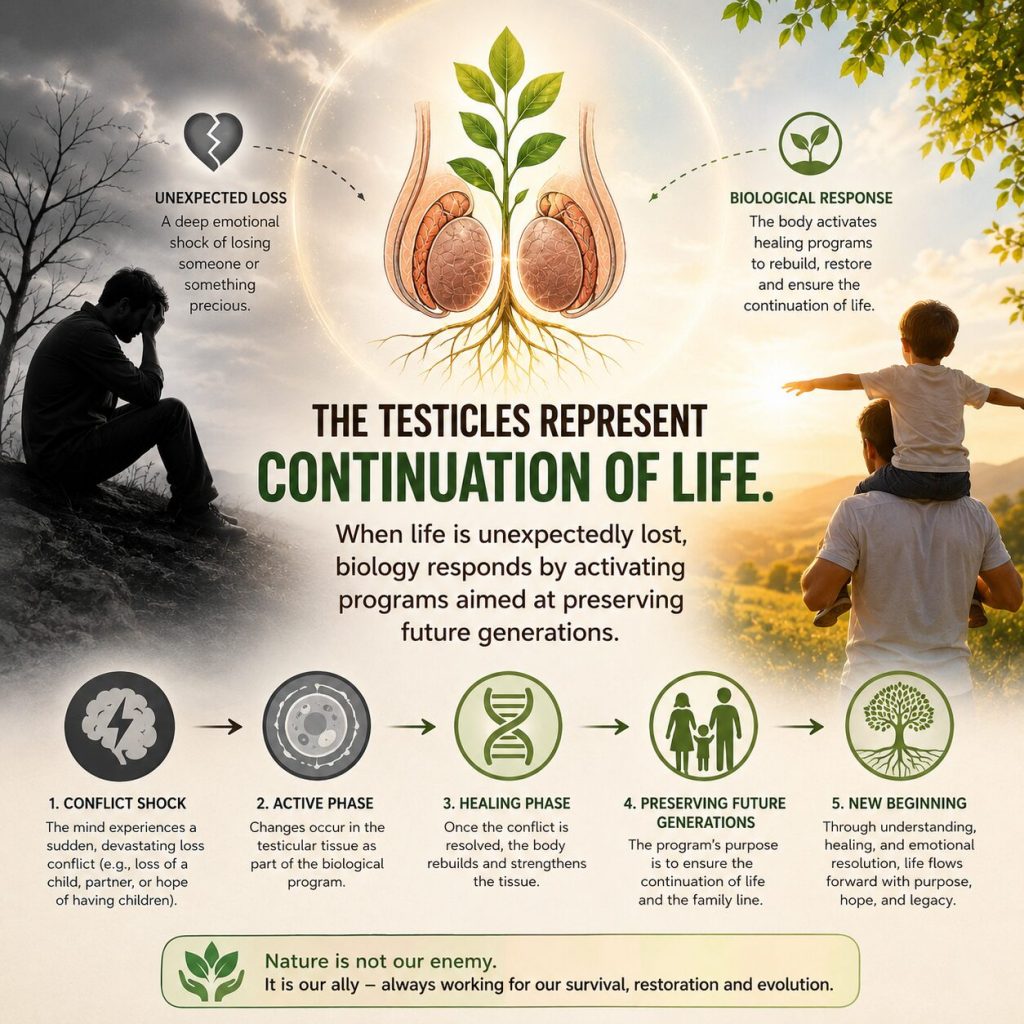
According to Germanic Healing Knowledge (GHK), the testicles are not merely reproductive organs—they are deeply connected with themes of loss, lineage, fatherhood, and the continuation of life. Every tissue within the testicle has a distinct biological purpose and responds to a specific type of unexpected emotional conflict.
The conflict associated depends on the tissue involved.
Biological Conflict
1. Testicular Interstitial Tissue (Leydig Cells)
Biological Conflict: Loss Conflict
A profound, unexpected loss involving someone or something deeply loved.
Examples include:
- Death of a child
- Miscarriage or stillbirth
- Death of a spouse
- Loss of a beloved family member
- Death of a pet considered like family
- Divorce or separation experienced as an irreparable loss
- Feeling that one’s lineage or future has been taken away
The greater the emotional intensity and isolation, the stronger the biological program.
2. Germ Cell Tumors (Seminoma / Teratoma)
GHK associates germ cell tumors with an offspring-loss conflict or a biological need to restore reproductive potential.
Examples:
- Loss of a child
- Fear of never becoming a father
- Infertility diagnosis
- Losing hope of having children
- Feeling one’s family line has ended
Biological Purpose
According to GHK, this biological program aims to increase reproductive potential after experiencing a severe loss, ensuring continuation of the family line from a biological perspective.
Conflict Active Phase (CA Phase)
During the active conflict:
Leydig Tissue
- Tissue necrosis develops
- Testosterone production may decrease
- Reduced libido
- Emotional withdrawal
- Constant preoccupation with the loss
- Sleep disturbance
- Cold extremities
- Reduced appetite
Germ Cells
According to GHK, germ cell proliferation occurs during the conflict-active phase, which conventional medicine may identify as seminoma or teratoma.
Healing Phase (PCL)
Once the loss conflict is emotionally resolved:
Leydig Tissue
The body begins rebuilding the lost tissue.
Possible symptoms include:
- Swelling of the testicle
- Increased blood supply
- Warmth
- Discomfort
- Fluid retention
- Temporary enlargement
During this rebuilding phase, conventional medicine may diagnose the tissue growth as a testicular tumor.
Questions During GHK Case Taking
A GHK practitioner may explore:
- When did the symptoms first begin?
- Did you recently lose someone very close?
- Was there a miscarriage, abortion, or infertility diagnosis?
- Have you experienced the death of a child, partner, or loved one?
- Did a relationship end suddenly?
- Did you lose someone you deeply cared for?
- Did you feel your future or lineage had ended?
- Has there been ongoing grief that remained unresolved?
GHK Therapy Approach
The therapeutic focus is not on fighting the body but on understanding and resolving the underlying emotional conflict.
1. Identify the Original DHS
Locate the exact unexpected conflict shock associated with the onset of symptoms.
2. Bring Conscious Awareness
Help the individual recognize how the biological program relates to the experience of loss.
3. Resolve the Emotional Conflict
Facilitate genuine emotional resolution through:
- Forgiveness
- Acceptance
- Emotional processing
- Prayer
- Gratitude
- Faith-based surrender
- Inner child work
- Family support
4. Prevent Conflict Relapses
Identify ongoing reminders that may repeatedly reactivate the loss conflict and develop healthier emotional responses.
5. Support the Healing Phase
Encourage:
- Rest
- Emotional safety
- Family connection
- Nutritious food
- Adequate hydration
- Stress reduction
- Trust in the body’s biological healing process
Case Example
A 38-year-old father lost his young son unexpectedly.
Following months of overwhelming grief, he noticed swelling in one testicle. Medical evaluation identified a testicular mass.
From the GHK perspective, the loss of his child represents the biological conflict, while the swelling reflects the body’s biological adaptation associated with the conflict and its resolution.
Key Insight
“The testicles represent continuation of life. When life is unexpectedly lost, biology responds by activating programs aimed at preserving future generations.”
Understanding the emotional meaning behind the conflict allows individuals to address not only the physical manifestation but also the unresolved experience that may have preceded it, according to the GHK model.