Rosacea from the Perspective of Germanic Healing Knowledge (GHK)
Conventional understanding
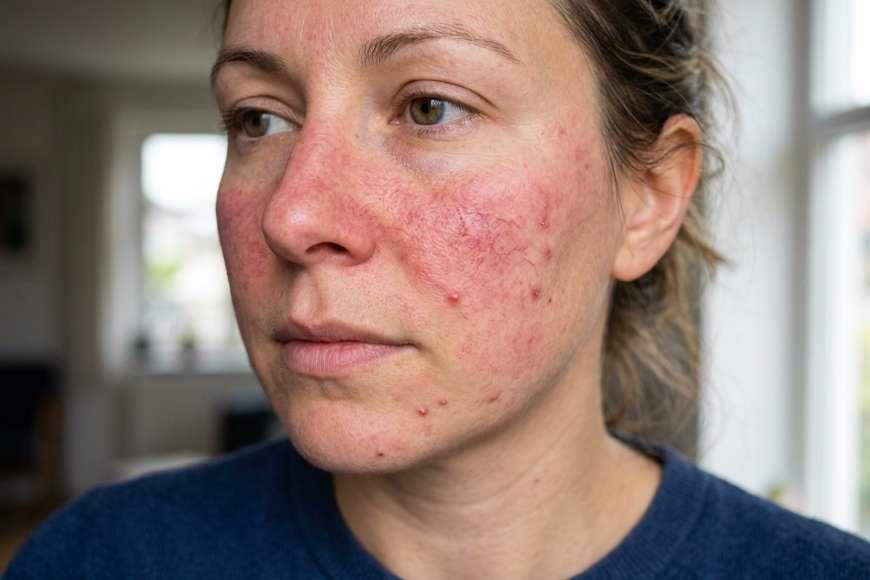
Rosacea is generally described as a chronic inflammatory skin condition characterized by:
- Persistent facial redness
- Flushing
- Visible dilated blood vessels (telangiectasia)
- Acne-like papules and pustules
- Burning or stinging sensations
- Thickening of the skin in some cases (especially the nose)
GHK Interpretation
According to GHK, rosacea is not viewed as a disease caused by the immune system attacking the skin. Instead, it is understood as a healing phase following conflicts involving the facial skin.
Biological Conflict
The facial skin (epidermis) is associated with a separation conflict, especially one that affects identity, appearance, or close relationships.
Examples include:
- Feeling rejected by a loved one.
- Losing physical closeness or affection.
- Feeling “pushed away.”
- Embarrassment or shame about one’s appearance.
- Feeling socially excluded or not accepted.
Because rosacea primarily affects the face, proponents may place special emphasis on conflicts related to:
- “Losing face.”
- Public humiliation.
- Feeling unattractive.
- Wanting to be seen but feeling rejected.
During the Conflict-Active Phase
According to GHK:
- The epidermis develops microscopic ulceration.
- The skin may become relatively numb or dry.
- Many people notice little or no visible change.
Healing Phase (PCL)
Once the conflict is emotionally resolved, GHK proposes that:
- Redness appears.
- Swelling develops.
- Increased blood flow supports tissue repair.
- Burning, itching, warmth, or acne-like eruptions can occur.
Repeated cycles of conflict and resolution are proposed to contribute to a chronic or relapsing pattern.
Why the Face?
GHK proponents suggest that facial involvement often reflects emotionally significant themes such as:
- Social image.
- Beauty.
- Acceptance.
- Relationships.
- Self-worth in front of others.
Questions a GHK Practitioner Might Explore
Examples include:
- When did the redness first begin?
- Was there a recent breakup or rejection?
- Did you experience humiliation or criticism?
- Did you feel you had “lost face” socially or professionally?
- Were you separated from someone whose affection mattered deeply?
- Does the redness flare after particular social situations?
These questions are part of the GHK framework and are not established diagnostic criteria.
Common Trigger Pattern (GHK View)
A possible sequence might be:
- Emotional separation, rejection, or humiliation.
- Conflict-active period with little visible change.
- Emotional resolution.
- Redness and inflammation during healing.
- New emotional triggers restart the cycle, contributing to recurring rosacea.
Case Pattern Often Described by GHK Practitioners
A person develops facial flushing after:
- A painful divorce.
- Public embarrassment.
- Persistent criticism at work.
- Feeling rejected by a partner.
As the emotional situation changes or resolves, redness and inflammatory symptoms are interpreted within GHK as part of the healing process. If similar emotional conflicts recur, symptoms may also recur according to this model.