“How Trauma & Emotions Cause Disease” (GHK / Germanic Healing Knowledge)
Dr. Melissa Sell’s presentation is essentially an introduction to the core principles of Germanic Healing Knowledge and how emotional shocks influence biology.
1. Disease Is Not Random
The central message is:
Symptoms are not mistakes.
Symptoms are meaningful biological adaptations.
According to GHK, the body is always responding intelligently to a situation perceived by the psyche.
Instead of asking:
“Why is my body attacking itself?”
GHK asks:
“What biological purpose does this symptom serve?”
2. The DHS (Dirk Hamer Syndrome)
Everything begins with a biological shock.
Characteristics:
- Unexpected
- Highly emotional
- Experienced in isolation
- Catches the person off guard
Examples:
- Sudden loss
- Betrayal
- Rejection
- Diagnosis
- Financial collapse
- Accident
- Threat to survival
The moment of shock affects:
- Psyche
- Brain
- Organ
simultaneously.
3. The Psyche-Brain-Organ Connection
One of the foundational ideas is:
Every emotional shock creates a corresponding adaptation in a specific brain relay and organ.
Different conflict themes affect different tissues.
Examples:
- Separation → skin
- Self-devaluation → bones, muscles, lymph
- Territory conflict → heart and arteries
- Morsel conflict → digestive organs
- Fear conflict → lungs and kidneys
4. The Two Phases of Every Program
Conflict Active Phase
When the stress is ongoing:
People may experience:
- Cold hands
- Poor sleep
- Anxiety
- Obsessive thinking
- Reduced appetite
Biological changes depend on the tissue involved.
Healing Phase
After resolution:
The body repairs.
This often includes:
- Pain
- Swelling
- Inflammation
- Fatigue
- Fever
- Discharge
What conventional medicine often calls “disease” is frequently interpreted by GHK as the healing phase.
5. Germ Layers Determine Symptoms
A major part of Melissa Sell’s teaching focuses on embryology.
Endoderm
Themes:
- Survival
- Food
- Security
- Morsels
Organs:
- Intestines
- Liver
- Pancreas
- Lungs (alveoli)
Old Mesoderm
Themes:
- Protection
- Attack
- Integrity
Organs:
- Dermis
- Peritoneum
- Pleura
- Pericardium
New Mesoderm
Themes:
- Self-worth
- Performance
- Capability
Organs:
- Bones
- Muscles
- Tendons
- Ligaments
- Lymph nodes
Ectoderm
Themes:
- Separation
- Territory
- Identity
Organs:
- Skin epidermis
- Bronchi
- Coronary arteries
- Bladder mucosa
- Cervix and vaginal mucosa
6. Symptoms Are Context Specific
A key teaching:
The same event affects different people differently.
Example:
A divorce.
One person may experience:
- Loss conflict → ovaries
Another:
- Separation conflict → skin
Another:
- Self-devaluation → shoulders
Another:
- Territory conflict → heart symptoms
The biology follows perception.
7. Tracks (Triggers)
Once a DHS occurs, the brain remembers everything present at that moment.
Later reminders can reactivate the program.
Examples:
- Smells
- Locations
- Songs
- People
- Dates
This explains recurring symptoms.
8. Microbes Are Helpers
According to GHK:
- Bacteria
- Fungi
- Mycobacteria
are biological assistants.
Their role is believed to be helping with repair and remodeling during healing.
9. Emotional Resolution Is Key
The goal is not fighting symptoms.
The goal is understanding:
- What happened?
- When did it happen?
- How was it perceived?
- Is the conflict still active?
Healing occurs when the biological need for the adaptation disappears.
10. The Most Important Takeaway
Melissa repeatedly emphasizes that:
The body is not broken.
The body is responding intelligently to experiences.
Symptoms become easier to understand when viewed through the lens of:
Biology + Perception + Conflict Timeline
rather than through pathology alone.
Healers Connect Summary
If I had to summarize the entire 4.5-hour masterclass in one sentence:
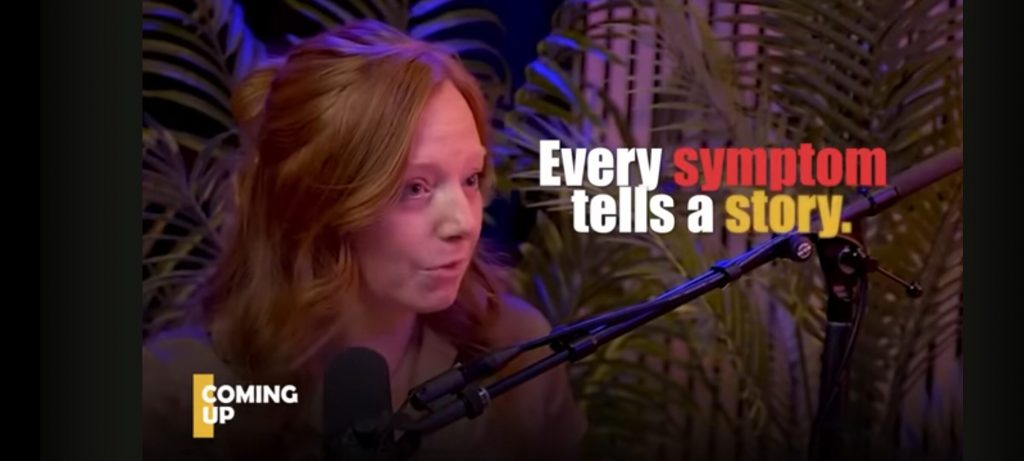
Every symptom has a biological story, and that story usually begins with an unexpected emotional shock that the subconscious mind perceived as important for survival.
The rest of GHK is essentially learning to identify:
- The conflict
- The germ layer
- The organ involved
- The active phase
- The healing phase
- The tracks keeping the program alive
and then helping the individual resolve the underlying conflict so the body no longer needs the adaptation.