– GHK Perspective
(Based on learninggnm.com – Nasal Mucosa SBS)
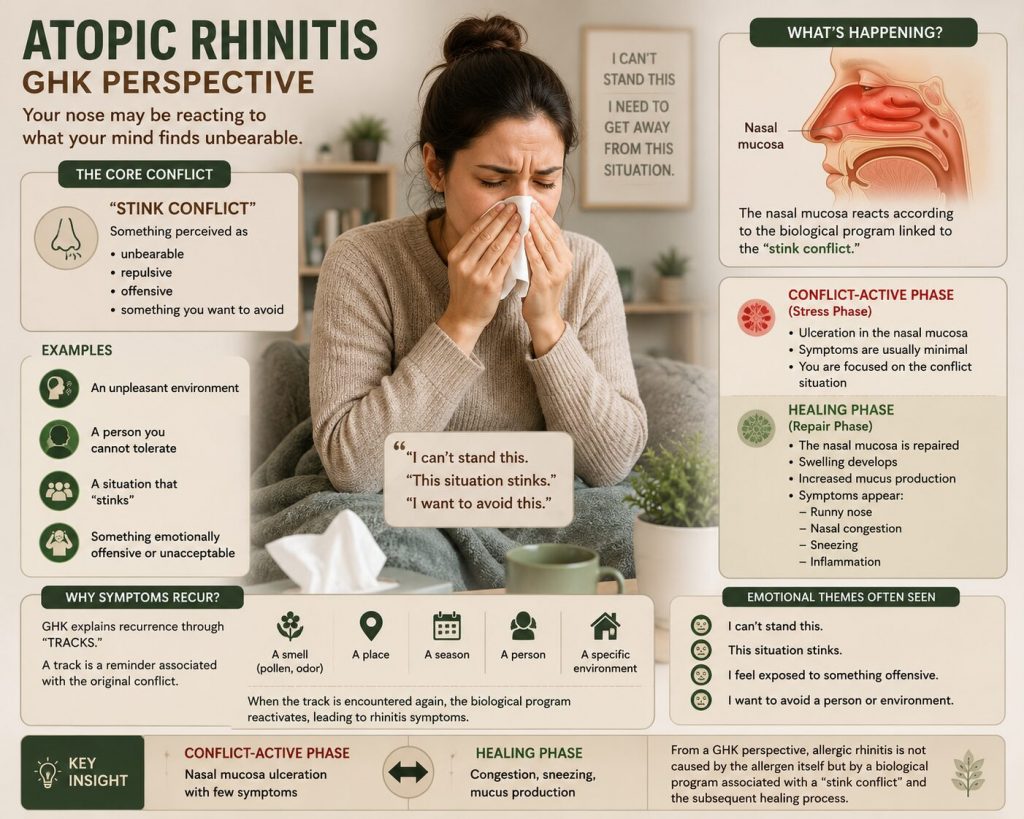
A Different Understanding
In conventional medicine, atopic rhinitis or allergic rhinitis is associated with allergens such as pollen, dust, animal dander, or environmental triggers.
In Germanic Healing Knowledge (GHK), the symptoms of rhinitis are understood through the biological program of the nasal mucosa, which is linked to a:
👉 “Stink Conflict”
This refers to something that is perceived as:
- unbearable
- repulsive
- offensive
- something one wants to avoid
The conflict can be literal or symbolic.
Examples may include:
- an unpleasant environment
- a person one cannot tolerate
- a situation that “stinks”
- something emotionally offensive or unacceptable
Conflict-Active Phase
During active conflict:
- ulceration occurs in the nasal mucosa
- symptoms are usually minimal
- the person is often preoccupied with the conflict situation
Healing Phase
After the conflict is resolved:
- the nasal mucosa is repaired
- swelling develops
- increased mucus production occurs
This may appear as:
- runny nose
- nasal congestion
- sneezing
- inflammation
According to GHK, these symptoms are signs of tissue restoration during healing.
Why Symptoms Recur Seasonally
GHK explains recurrence through tracks.
A track is a reminder associated with the original conflict.
Examples:
- a smell
- a place
- a season
- a person
- a specific environment
When the track is encountered again, the biological program can reactivate, leading to recurring rhinitis symptoms.
Emotional Themes Often Seen
- “I can’t stand this.”
- “This situation stinks.”
- feeling exposed to something offensive
- wanting to avoid a person or environment
Key Insight
✔ Conflict-active phase → nasal mucosa ulceration with few symptoms
✔ Healing phase → congestion, sneezing, mucus production
From a GHK perspective, allergic rhinitis is not caused by the allergen itself but by a biological program associated with a “stink conflict” and the subsequent healing process when that conflict is resolved or re-triggered.
Reference
learninggnm.com – Tracks and Recurrences Principles
learninggnm.com – Nose and Nasal Mucosa SBS