What Went Wrong?
A GHK perspective on understanding the child behind the behaviour
A child who is shouting, hitting, bullying, refusing, throwing tantrums or constantly fighting is often treated as a “problem child.”
But what if the behaviour is actually telling us:
“Something is wrong with my sense of safety, belonging or territory.”
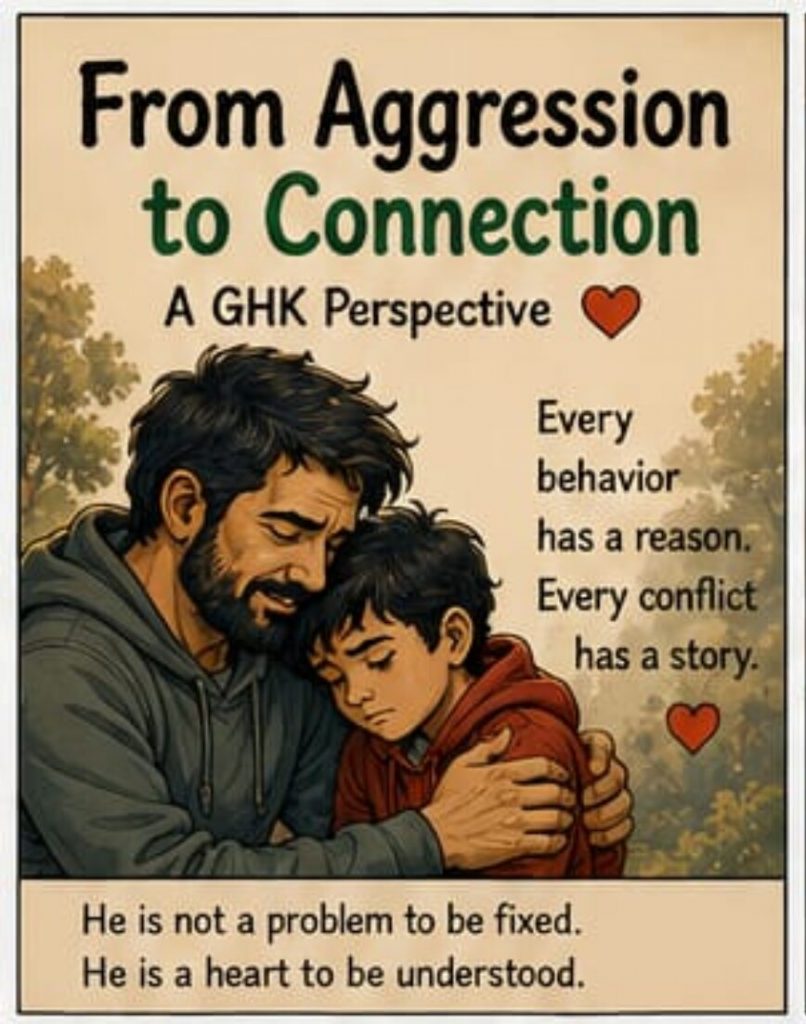
According to the GHK framework described on LearningGNM, the Aggressive Constellation involves two biological conflicts: territorial anger and identity conflict. The site specifically applies this framework to children who become aggressive, disruptive, disobedient, resentful or bullying. (Learning GNM)
What could be happening?
The two questions to explore are:
1. Territorial anger — “I am angry about what is happening in my space.”
For a child, this could relate to:
- Anger at home
- Anger at school
- Feeling invaded or controlled
- Repeated arguments
- Conflict with parents, siblings or teachers
2. Identity conflict — “Where do I belong?”
Explore experiences such as:
- “Where is my home?”
- “Which family am I part of?”
- Feeling different or excluded
- Not fitting in
- Major changes in family structure
- Feeling that there is no secure place where they belong
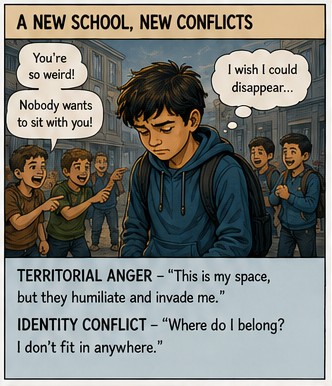
GHK specifically describes anger at home/school and “not knowing where to belong” as relevant conflict themes for aggressive behaviour in children.
Don’t Ask Only: “How Do We Stop the Behaviour?”
Ask instead:
“What happened before the behaviour changed?”
Create a timeline.
- When did the aggression begin?
- What changed at home around that time?
- Was there a separation, relocation or family conflict?
- Did the child change schools?
- Did a sibling arrive?
- Was there bullying or humiliation?
- Did the child lose an important relationship?
- Where does the aggression happen—home, school, or both?
- Who is the child most reactive toward?
- What particular situations immediately trigger the behaviour?
The GHK model places particular importance on tracks—specific people, situations or subjects that can reactivate the conflict pattern. (Learning GNM)
Can It Change in One Week?
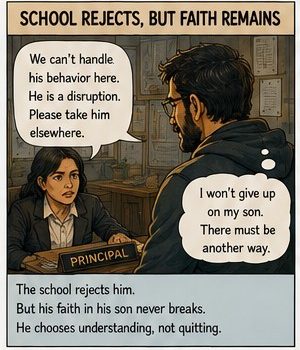
Possibly—but don’t promise a “cure in 7 days.”
A week can be enough to change the environment, identify important triggers, understand what the child is communicating, and begin resolving the underlying emotional situation.
But whether aggressive behaviour completely disappears depends on the child’s circumstances and the conflicts involved.
The goal is not:
“Make the child obedient.”
The goal is:
“Understand what the child is experiencing and create the conditions in which the child no longer needs to defend themselves through aggression.”
LearningGNM itself emphasizes that, for children, addressing the circumstances of the conflicts is more important than simply suppressing the behaviour. It specifically describes a secure and stable home where the child knows where they belong as an important approach. (Learning GNM)
A 7-Day “What Went Wrong?” Journey
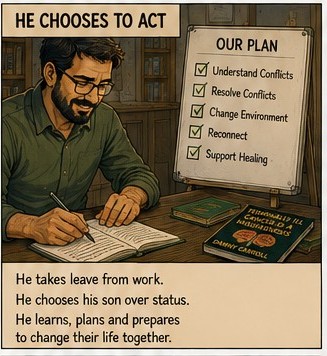
Day 1 — Observe
Stop immediately labelling the child as naughty, difficult or disobedient. Record when the behaviour occurs.
Day 2 — Find the Beginning
Go backwards and identify when the behaviour first changed.
Day 3 — Find the Territory
Where does the child feel angry, invaded, controlled or unsafe?
Day 4 — Find Belonging
Explore: “Where does my child feel they belong?”
Day 5 — Find the Tracks
Identify the people, places and situations that repeatedly push the emotional button.
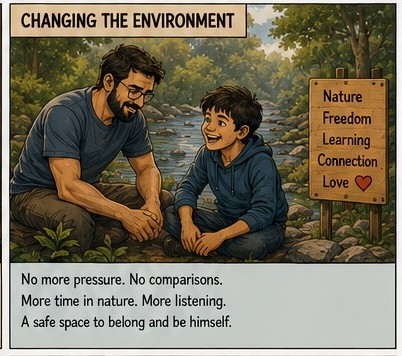
Day 6 — Change the Environment
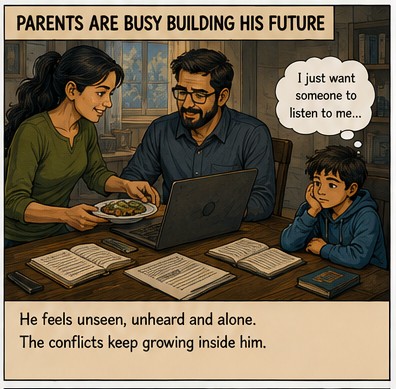
Reduce unnecessary confrontation. Increase security, connection, predictable routines and genuine listening.
Day 7 — Reconnect
Instead of asking, “How do I control my child?”, ask:
“What does my child need from me to feel safe, loved and that they truly belong?”
❤️ The Parent’s Role
From this perspective, more punishment may not be the answer.
A child who feels unsafe may need more connection, not more instructions.
A child who feels displaced may need belonging, not comparison.
A child who feels constantly controlled may need trust, not another battle.
And sometimes the first thing that needs to change is not the child—but the emotional environment around the child.
What if aggression is not the child asking for more discipline—but asking us to discover what went wrong?
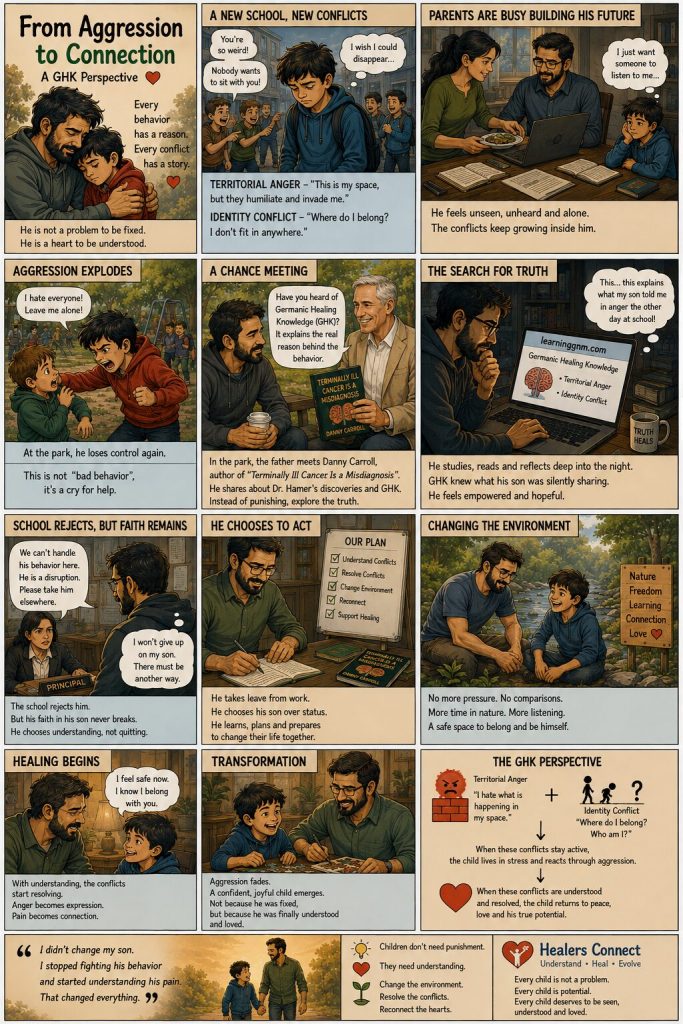
Brain Constellation Analysis: Territorial Anger + Identity Conflict in a Child
In Germanic New Knowledge (GHK), when a person (or a child) experiences two or more biological conflict shocks (DHS) involving specific, complementary brain relays simultaneously, the brain enters what Dr. Hamer called a Constellation.
When a child is caught in a dual conflict of Territorial Anger and an Identity Conflict, the brain creates a specific psychological and behavioral state known as a Schizophrenic Constellation (specifically involving the cerebral cortex / post-sensory and motor/social areas).
1. Mapping the Two Individual Conflicts
Conflict 1: Territorial Anger / Frustration
- Brain Relay: Controlled from the motor cortex (temporal/post-central region associated with the muscular ring of the bronchial tubes/larynx or coronary vessels, depending on the exact nuance).
- Biological Theme: “There is a boundary violation in my territory; someone is intruding where they shouldn’t be, and I am furious/frustrated that I cannot push them back or defend my space.”
- Behavioral/Physical Expression: Extreme anger, irritability, aggression, and readiness to fight for one’s boundaries.
Conflict 2: Identity Conflict (Orientation / “Where do I belong?”)
- Brain Relay: Controlled from the post-sensory cortex (specifically the cortex region managing the periosteum and social orientation).
- Biological Theme: “Who am I? Where do I belong? I don’t know my place in the pack/family anymore. I am lost, disoriented, or displaced from my social standing.”
- Behavioral/Physical Expression: Disorientation, loss of a sense of self, wandering behavior, feeling unrecognized or alienated within the family or social group.
2. The Resulting Constellation: The “Disoriented Aggression / Rebel” State
When both the Territorial Anger relay (motor/border defense) and the Identity/Orientation relay are simultaneously active on opposite hemispheres (or dual cortical activation), the child enters a distinct cortical constellation.
Psychological and Behavioral Characteristics of This Constellation:
- Explosive, Undirected Rage: Unlike simple territorial anger (which has a clear target or enemy), the addition of the identity conflict creates a child who is furiously angry at the whole world because they feel completely displaced and unrecognized. They are striking out not just to defend a boundary, but out of a profound sense of “I don’t belong here, and everything is wrong.”
- Profound Alienation Combined with Defiance: The child acts out aggressively (territorial anger) while simultaneously feeling completely lost, invisible, or detached from their roots and identity (identity conflict).
- Hyper-Activity or Rebellious Wandering: In children, this constellation often manifests as intense restlessness, defiance against authority, running away from home, or joining disruptive peer groups to find a fake “identity” to replace the lost one.
3. The Dharmic & GHK Perspective: Why Is This Happening to Children Today?
When we look at why modern children frequently slip into this specific constellation (Territorial Anger + Identity Conflict), we must look past individual psychology to the root dharmic violation:
- Violation of Natural Belonging: Children are biologically designed to grow within a secure, integrated ecosystem (family, community, nature, and shared Dharma). Modern urban uprooting, broken nuclear family structures, and institutionalized schooling tear children away from their natural community matrix, instantly triggering an Identity Conflict (“Who am I? Where is my real pack?”).
- The Invasion of Artificial Environments: When these displaced children are placed into rigid, high-pressure, unnatural environments where their natural bodily and spatial expressions are restricted, any attempt to protect their personal space results in constant boundary violations, triggering Territorial Anger.
Conclusion
In GHK, a constellation is not a “mental illness” to be drugged or suppressed; it is an intelligent survival state of a brain trying to navigate a dual crisis. A child caught in a Territorial Anger + Identity Conflict constellation is shouting a biological warning: their boundaries are being violated, and they have lost their sense of secure belonging. True healing requires restoring the child’s natural environment—reconnecting them with a secure community, open space, and a clear sense of identity rooted in Dharma.