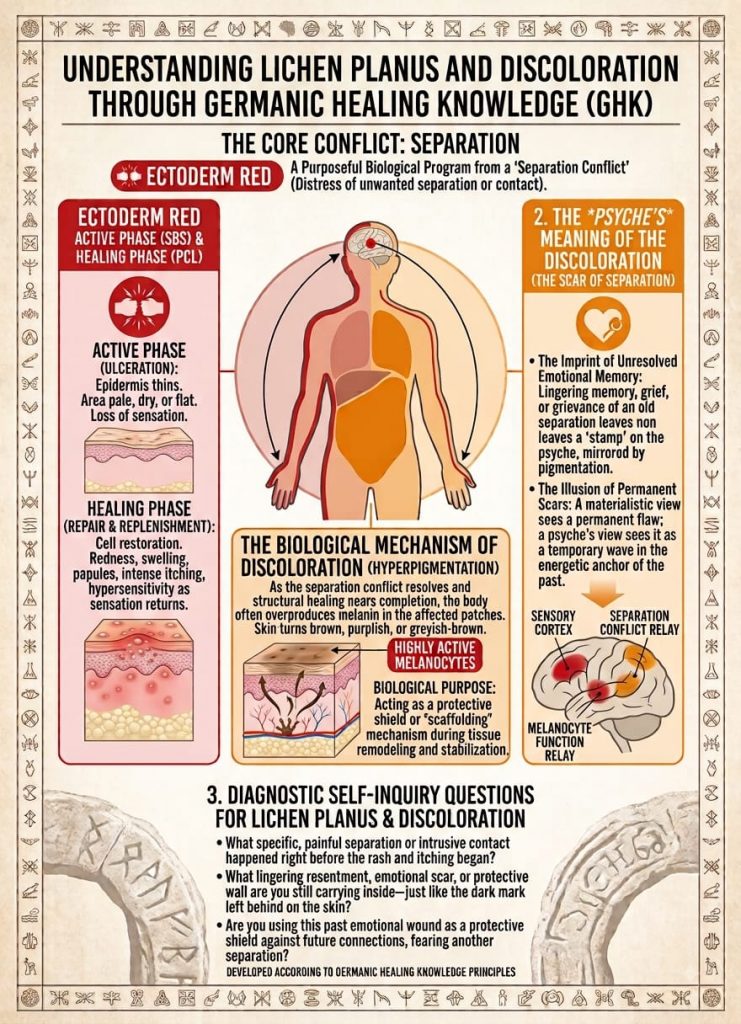
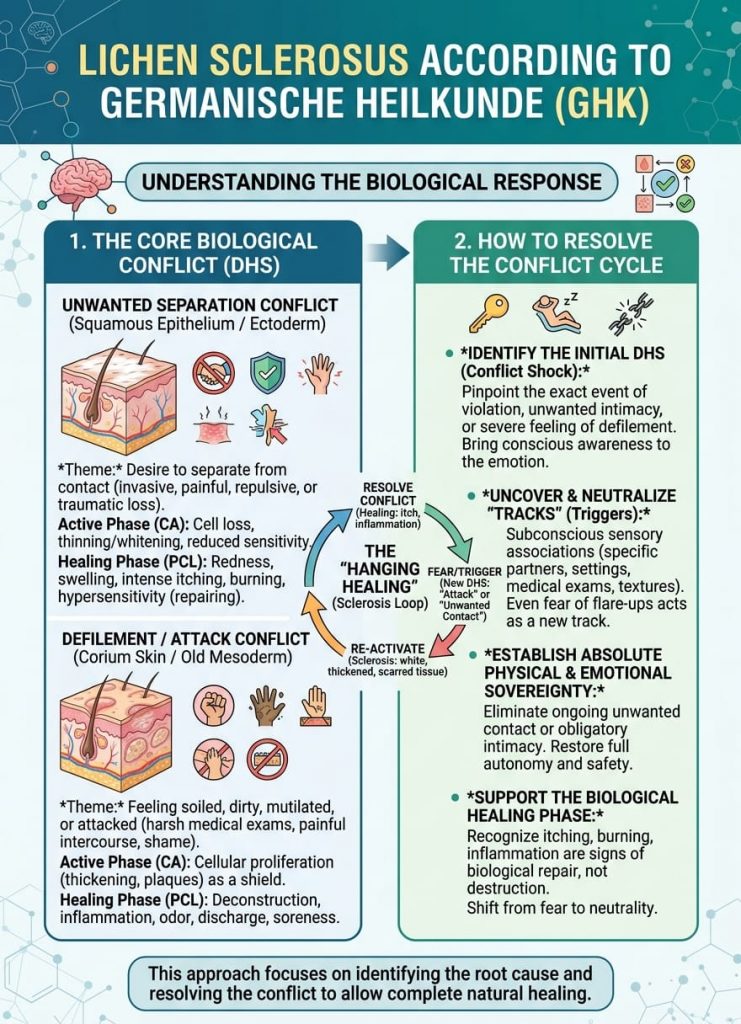
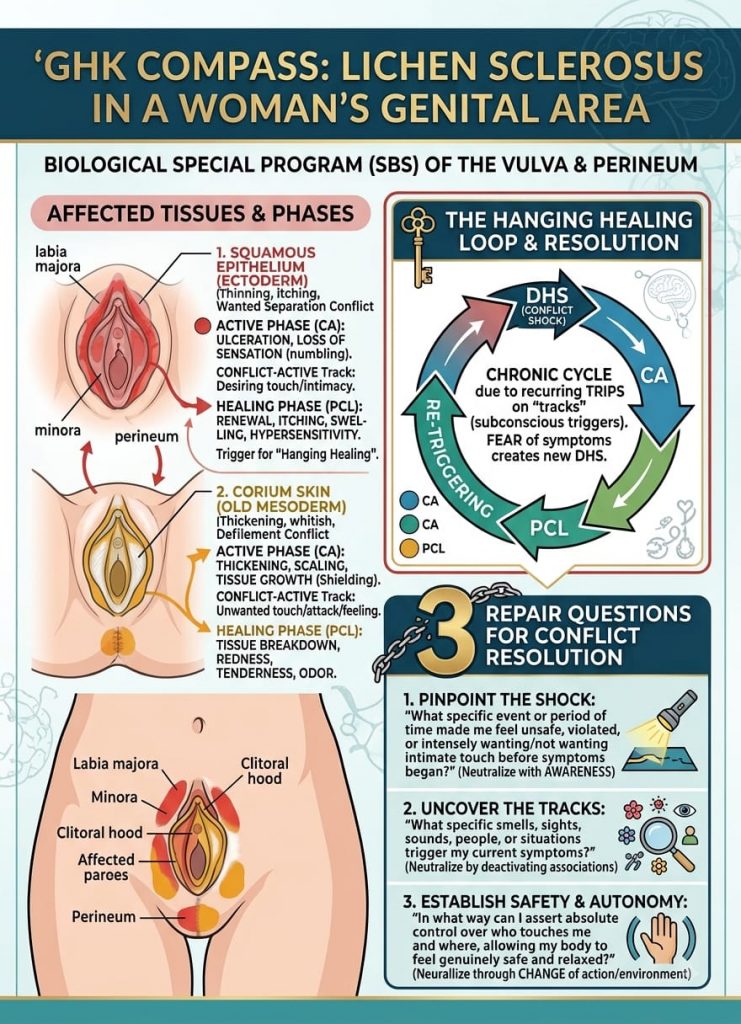
In GHK, skin conditions are purposeful biological programs controlled by the sensory cortex, related to a Separation Conflict (the distress of unwanted separation from, or unwanted contact with, someone or something).
When reviewing lichen planus, the characteristic darkening or hyperpigmentation that frequently lingers on the skin during or after the healing phase has a precise biological mechanism.
1. Why Skin Discoloration Happens in GHK
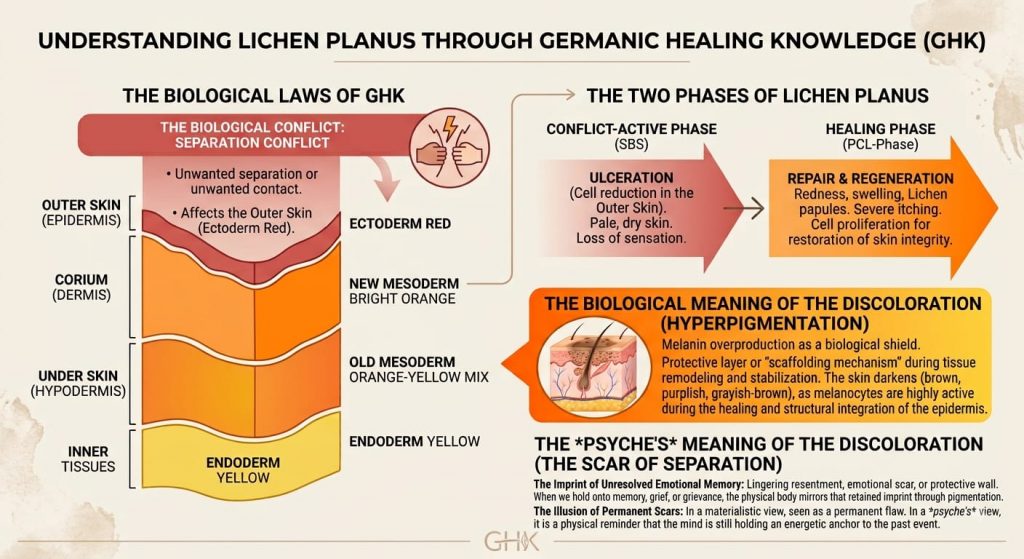
- Active Phase (Ulceration): During the active conflict, the epidermis thins (cell loss), and the area can look pale, dry, or flat.
- Healing Phase (Repair & Replenishment): Once the separation conflict is resolved, the body rushes to repair the thinned skin. This involves swelling, redness, papules, and intense itching as sensation returns.
- The Role of Melanin (Hyperpigmentation/Discoloration): As the epidermis completes its repair and the deep layers of the skin normalize, the body often overproduces melanin in the affected patches. From a biological standpoint, this increased pigmentation acts as a protective shield or a “scaffolding” mechanism during the final stages of tissue remodeling and reinforcement. The skin darkens (turning brown, purplish, or greyish-brown) because the melanocytes are highly active during the structural healing and stabilization of the epidermis.
2. The Dharmic Meaning of the Discoloration (The Scar of Separation)
Just as the physical skin darkens to protect and reinforce itself after a healing trauma, the dharmic reflection looks at what this lingering mark represents:
- The Imprint of Unresolved Emotional Memory: Skin discoloration that lingers long after the physical itch subsides mirrors how deep emotional wounds leave a “stamp” on our psyche. When we hold onto the memory, grief, or grievance of an old separation, the physical body mirrors that retained imprint through pigmentation.
- The Illusion of Permanent Scars: In a materialistic mindset, a skin discoloration is seen as a permanent flaw. In a dharmic view, it is recognized as a temporary wave in the ocean of the body—a physical reminder that the mind is still holding an energetic anchor to the past event instead of returning to a state of fluid, unattached presence.
3. Diagnostic Self-Inquiry Questions for Lichen Planus and Discoloration
To uncover the root of both the breakout and the lingering discoloration, ask the following questions:
Releasing the Guard: “Are you using this past emotional wound as a protective shield against future connections, fearing another separation?”
The Core Separation: “What specific, painful separation or intrusive contact happened right before the rash and itching began?”
The Residual Holding: “Even though the active conflict may feel ‘resolved,’ what lingering resentment, emotional scar, or protective wall are you still carrying inside—just like the dark mark left behind on the skin?”