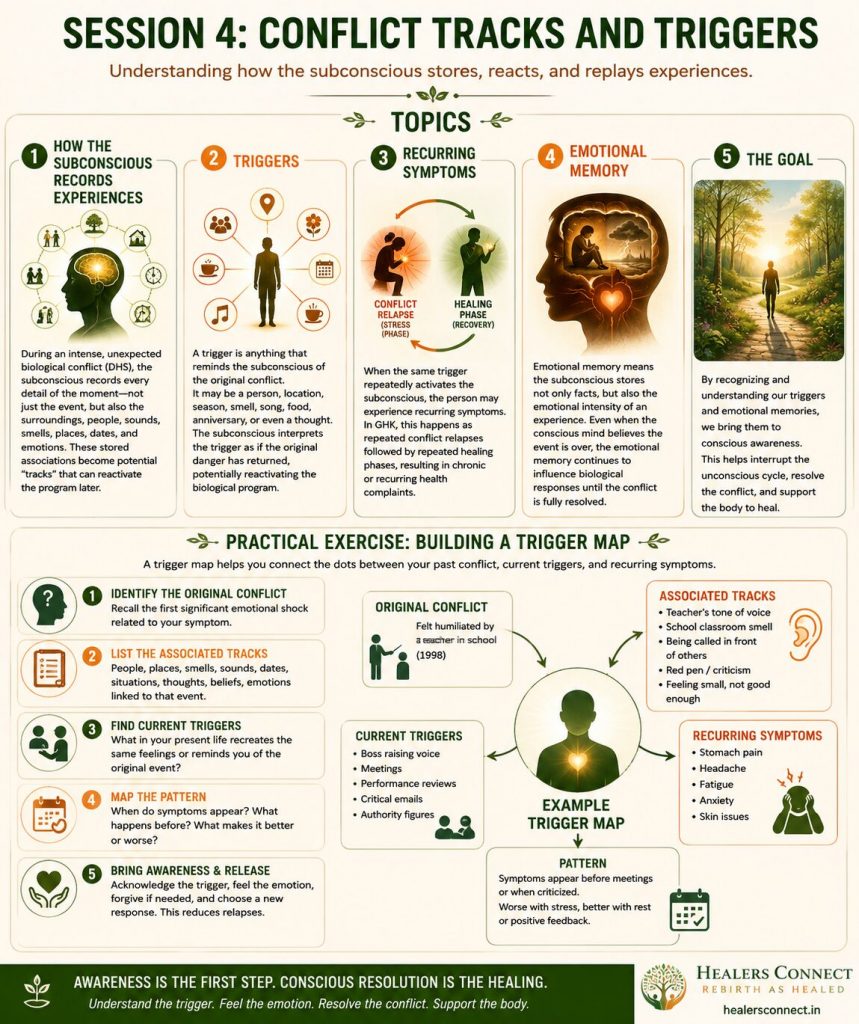
1. How the Subconscious Records Experiences
According to GHK, when a person experiences an unexpected, emotionally intense biological conflict (DHS), the subconscious records every detail of that moment—not only the event itself, but also the surrounding environment, people, smells, sounds, places, dates, and emotions. These stored associations become potential “tracks” that can reactivate the program later.
2. Triggers
A trigger is anything that reminds the subconscious of the original conflict. It may be a person, location, season, smell, song, food, anniversary, or even a thought. The subconscious interprets the trigger as if the original danger has returned, potentially reactivating the biological program.
3. Recurring Symptoms
When the same trigger repeatedly activates the subconscious, the person may experience recurring symptoms. In GHK, this is often explained as repeated conflict relapses followed by repeated healing phases, resulting in chronic or recurring health complaints.
4. Emotional Memory
Emotional memory refers to the subconscious storing not only facts but also the emotional intensity of an experience. Even when the conscious mind believes the event is over, the emotional memory may continue to influence biological responses until the conflict is fully resolved.
Practical Exercise: Building a Trigger Map
Create a personal timeline by identifying:
- The first significant emotional conflict related to your symptom.
- People, places, smells, sounds, dates, or situations linked to that event.
- Current situations that recreate those same feelings.
- Patterns showing when symptoms appear and disappear.
The goal is to recognize unconscious triggers so they can be addressed consciously, reducing repeated conflict relapses according to the GHK framework.