Involuntary Movement of Jaws — GHK (Germanic Healing Knowledge) Perspective
In GHK, involuntary jaw movements (twitching, clenching, chattering, grinding, sudden jerks) are not neurological defects. They are biological motor responses linked to unresolved or oscillating bite–attack–defense conflicts.
1. Core Biological Meaning
The jaw is a primitive survival organ.
Biologically it exists to:
- Bite
- Hold
- Attack
- Defend territory
- Protect offspring
- Threaten when words fail
👉 When the psyche wants to bite or defend, but cannot, the impulse may discharge as involuntary movement.
2. Central Conflict Theme
“I want to bite / attack / defend — but I am not allowed to.”
This inhibition may be:
- Social (“I must stay polite”)
- Moral (“I shouldn’t react”)
- Fear-based (“If I react, there will be consequences”)
- Power-based (authority, elder, system)
3. Why the Movement Is Involuntary
When expression is blocked consciously, the body releases it unconsciously.
This results in:
- Jaw trembling
- Sudden snapping movements
- Bruxism (night grinding)
- Jaw locking and releasing
- Chattering without cold
👉 The motor cortex receives conflicting signals:
- Attack impulse ON
- Conscious inhibition ON
This creates motor instability.
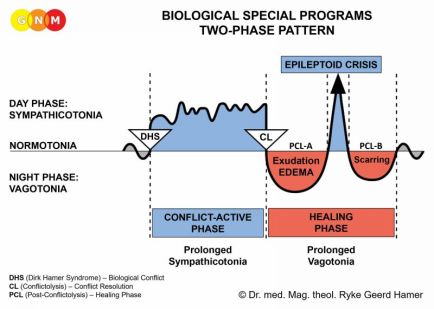
4. Phase Understanding (Very Important)
🔴 Conflict-Active Phase
- Jaw tension
- Micro-movements
- Clenching without awareness
- No pain or mild discomfort
- Hyper-vigilance
Often dismissed as “stress”.
🔁 Conflict Oscillation (Most Common)
- Repeated jaw jerks
- Twitching during emotional triggers
- Symptoms worsen when thinking about the person/situation
- Appears “neurological” but is conflict looping
This happens when the person:
- Wants to react
- Stops themselves
- Replays the incident mentally
🟢 Healing Phase (After Inner Resolution)
- Jaw soreness
- Temporary stiffness
- Fatigue
- Swelling around TMJ
These are repair symptoms, not pathology.
5. Typical Life Situations Behind Jaw Movements
- Being humiliated and forced to stay silent
- Repressed anger toward spouse, parent, teacher, boss
- Inability to protect one’s child
- Chronic injustice with no outlet
- Forced compliance (legal, financial, social)
- Long-term caregiving resentment
- Spiritual bypassing (“I must stay calm / forgiving” while anger remains unresolved)
6. Children & Jaw Movements
In children, involuntary jaw movements often reflect:
- Parental conflict
- Suppressed expression at school
- Fear of authority
- Feeling powerless in adult-controlled environments
Children mirror unresolved conflicts of caregivers.
7. Why It Is Misdiagnosed
Conventional labels include:
- Anxiety disorder
- Tics
- Bruxism
- TMJ dysfunction
- Neurological disorder
GHK clarifies:
The jaw is executing a blocked survival program, not malfunctioning.
8. Resolution (GHK Way)
Healing does not start with splints, muscle relaxants, or suppression.
True resolution involves:
- Identifying the exact bite conflict
- Naming who/what you wanted to defend against
- Acknowledging the right to bite/defend (even if never acted upon)
- Emotional completion (expression, forgiveness, boundary clarity)
- Inner permission: “I am allowed to protect myself.”
When the psyche resolves:
- Motor symptoms settle naturally
- No forceful intervention needed
9. Key Insight
Involuntary jaw movement is frozen aggression seeking completion.
The body is not broken — it is unfinished.