– Germanic Healing Knowledge (GHK) Perspective
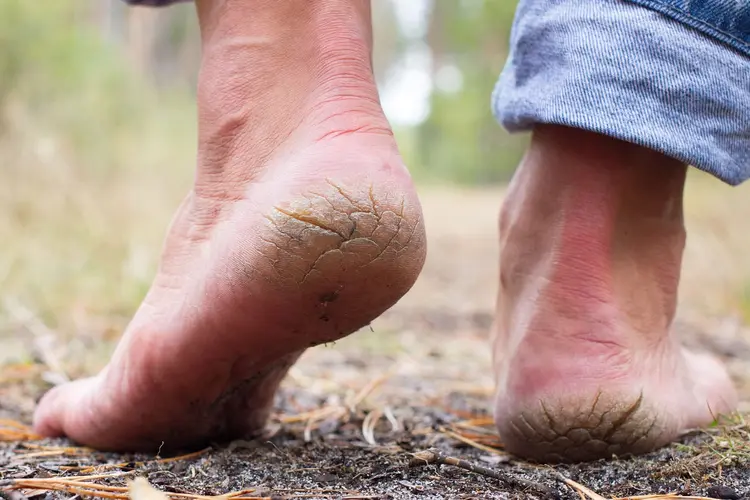
Dry cracked feet, especially cracked heels (heel fissures), are very common and are usually explained in conventional medicine by factors such as:
- Dry skin
- Pressure on the heel
- Standing for long periods
- Nutritional deficiencies
- Dehydration or skin disorders
From the perspective of Germanic Healing Knowledge (GHK), developed by Dr. Ryke Geerd Hamer, symptoms affecting the skin of the feet are interpreted through the biological conflict themes connected with the epidermis and the functional meaning of the feet.
Biological Meaning of the Feet in GHK
In GHK symbolism, different body parts correspond to specific functional meanings.
The feet are associated with:
- Moving forward in life
- Taking steps in a direction
- Standing one’s ground
- Life path or progress
Therefore, conflicts affecting the feet often relate to themes such as:
- “I cannot move forward.”
- “I am stuck in this situation.”
- “I cannot take this step in life.”
Skin Layer Involved
Dry cracked heels mainly involve the epidermis (outer skin layer).
The epidermis is associated with separation conflicts.
Separation Conflict Theme
A separation conflict relates to losing or wanting separation from physical or emotional contact.
Examples may include:
- Separation from a loved one
- Being forced to leave a place
- Wanting distance from someone or somewhere
- Losing contact with a familiar environment
When the conflict relates to movement or life direction, the skin of the feet may be involved.
Biological Phases
Conflict-Active Phase
During the conflict-active phase:
- The epidermis develops ulceration (microscopic skin thinning)
- The skin becomes dry and rough
- Cracks may develop
This stage usually has little inflammation.
Healing Phase
When the separation conflict resolves:
- Skin repair begins
- Redness and inflammation may appear
- Itching or sensitivity may occur
In this phase the skin attempts to rebuild the damaged area.
Why Cracks Often Occur on the Heels
The heel is the main weight-bearing area of the foot.
In GHK interpretation, heel involvement may symbolically relate to:
- Feeling unsupported in life
- Carrying heavy responsibilities
- Difficulty progressing in one’s life path
Possible Life Situations Linked to Foot Skin Conflicts
Examples discussed in GHK teachings include:
- Being forced to relocate
- Feeling unable to move forward in career or life direction
- Being stuck in a difficult relationship
- Losing connection with one’s home or community
- Feeling unsupported while carrying responsibilities
Laterality Consideration
GHK also considers biological handedness when interpreting symptoms.
For a right-handed person:
- Right foot issues may relate to partner relationships (spouse, colleagues, peers)
- Left foot issues may relate to mother/child relationships
This framework is commonly discussed in GHK seminars and lectures by Helmut Pilhar.
Reflective Questions (GHK Approach)
To explore possible emotional contexts:
- When did the cracked feet first appear?
- Did a situation arise where you felt stuck or unable to move forward?
- Did you experience separation from a place, person, or path in life?
- Did you feel unsupported while carrying responsibilities?
Understanding the life circumstances surrounding the onset of symptoms may provide clues within the GHK framework.
Summary
According to the GHK perspective:
- Dry cracked feet relate to separation conflicts connected with movement or life direction.
- Skin thinning and dryness occur during the conflict-active phase.
- Repair and inflammation may appear during the healing phase.
- The location on the feet reflects the biological symbolism of movement and life path.
This interpretation emphasizes the relationship between emotional experiences, brain responses, and skin physiology.