Lung Consolidation from a Germanic Healing Knowledge (GHK) Perspective
In conventional medicine, lung consolidation refers to the filling of lung alveoli with fluid, pus, blood, or cellular debris — commonly seen in pneumonia.
In Germanic Healing Knowledge (GHK), Symptons are referred to as SBS (Sinnvolles Biologisches Sonderprogramm — Meaningful Biological Special Program), and lung consolidation is understood very differently.
It is interpreted as a healing-phase event following a specific biological conflict.
Understanding Lung Tissue in GHK
The lungs contain different tissues, each linked to a different conflict theme:
1️⃣ Alveoli (Air Sacs)
Conflict Theme:
Death-fright conflict
This is the most important tissue in lung consolidation cases.
The Death-Fright Conflict
This conflict is experienced as:
- “I am going to die.”
- “Someone close to me may die.”
- Sudden fear related to survival.
- Shock after a diagnosis.
- Seeing someone collapse.
- Witnessing an accident.
It must be:
- Sudden
- Isolating
- Highly emotional
Conflict-Active Phase (Silent Phase)
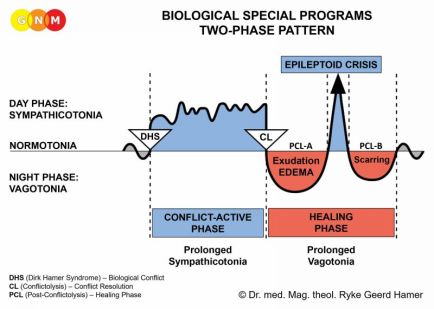
During the death-fright conflict:
- Alveolar cells proliferate (increase in number).
- This is biologically meant to improve oxygen intake.
- It is considered a survival response.
Often there are:
- No noticeable symptoms.
- Heightened alertness.
- Anxiety.
In mainstream medicine, this proliferation may be misinterpreted as tumor formation.
Healing Phase (Where Consolidation Appears)
Once the death-fright conflict resolves:
- The extra alveolar cells are broken down.
- Edema and inflammation occur.
- Fluid accumulation develops.
- Cough, fever, fatigue may appear.
This phase is often diagnosed as:
- Pneumonia
- Lung consolidation
- Pulmonary infection
In GHK terminology:
Consolidation represents the breakdown and removal of conflict-active cell growth.
Why Fever and Cough Occur
According to GHK:
- Fever assists biological breakdown.
- Cough expels debris.
- Fatigue conserves energy for repair.
- Mucus supports elimination.
These are considered coordinated healing mechanisms.
Typical Case Pattern Seen in GHK Teachings
A common pattern described in GHK seminars and case discussions:
- A person receives a frightening diagnosis.
- They experience intense fear of dying.
- Weeks later, they emotionally calm down.
- Shortly afterward, they develop pneumonia symptoms.
From the GHK lens:
- The diagnosis triggered the conflict.
- Resolution triggered consolidation.
Special Situations in Children
In children, lung SBS may follow:
- Being separated from parents suddenly.
- Nighttime panic.
- Fear after being hospitalized.
- Witnessing parental distress.
Children often enter healing quickly once reassurance is restored.
Recurrent Lung Consolidation
If consolidation repeats, it suggests:
- Re-triggered death-fright conflict.
- Recurrent fear stimulus.
- Ongoing subconscious threat perception.
Identifying the original emotional trigger becomes central in this model.
Bronchi vs Alveoli (Important Distinction)
Lung symptoms depend on tissue type:
| Tissue | Conflict Theme | Healing Symptoms |
|---|---|---|
| Alveoli | Death-fright | Consolidation, pneumonia |
| Bronchi | Territorial fear | Bronchitis, cough |
| Pleura | Attack conflict | Pleuritis |
Consolidation most commonly corresponds to alveolar healing.
SBS Interpretation Summary
From the GHK perspective:
- Lung consolidation is not random.
- It follows a specific emotional shock.
- It represents a healing-phase biological process.
- The body is resolving a survival program.
The central question becomes:
What was the death-fright conflict?
When did it resolve?